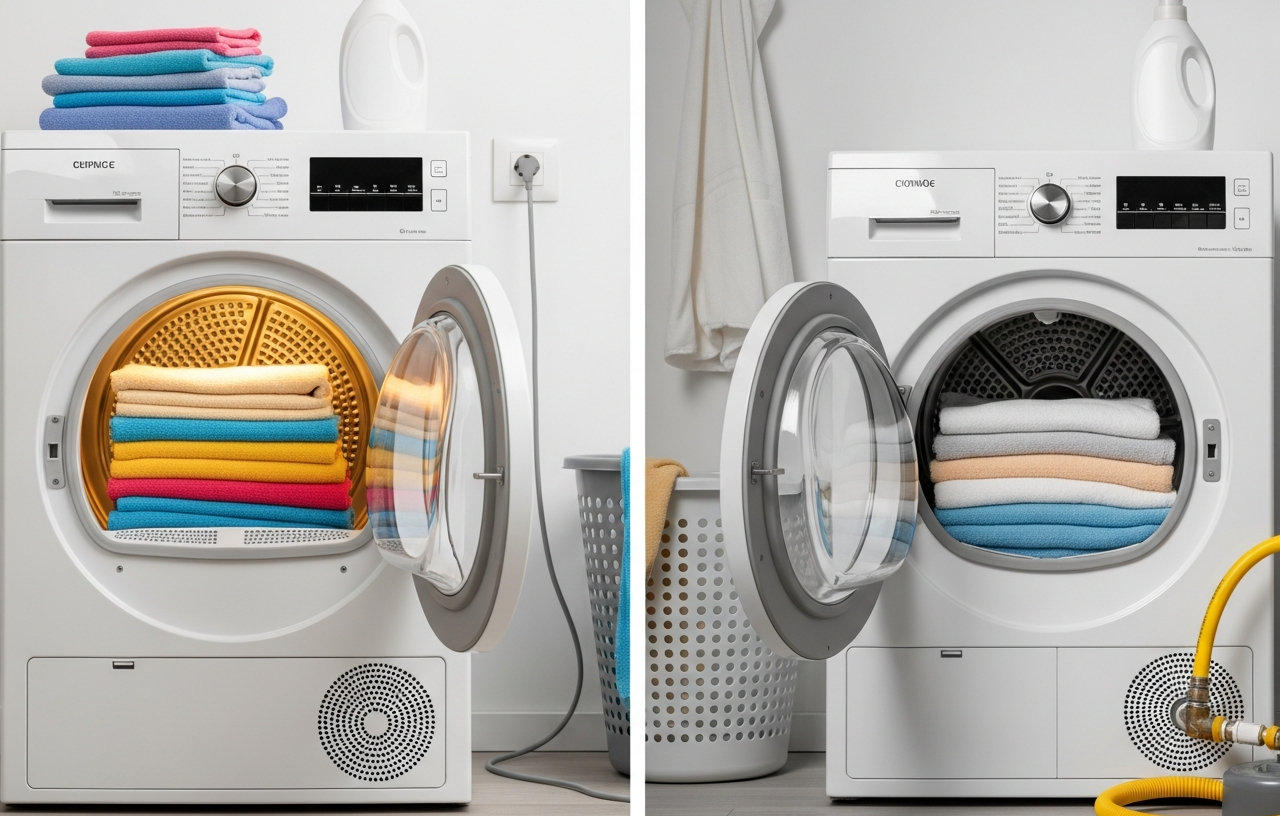
Choosing between an electric and a gas dryer involves more than just the appliance purchase price. The long term operating costs and initial installation expenses vary significantly. Electric dryers typically cost $40-$80 per month to operate, while gas dryers might be $25-$55 per month, depending on local utility rates and usage frequency. Initial installation for a gas line can add $300-$800 to the total cost if one is not present. Installing a new 240V electric circuit, if needed, might cost $200-$600.
Understanding Electric Dryer Operating Costs
Electric dryers heat air using an electrical heating element. Their operating cost depends on your local electricity rates and how often you run the appliance. To estimate your annual cost, consider running four loads per week, with each load using 4 kWh:
- Weekly Consumption: 4 loads/week * 4 kWh/load = 16 kWh
- Monthly Consumption: 16 kWh/week * 4.33 weeks/month = 69.28 kWh
- Annual Consumption: 16 kWh/week * 52 weeks/year = 832 kWh
Using an average electricity rate of $0.20 per kWh:
- Annual Cost: 832 kWh * $0.20/kWh = $166.40
- Monthly Cost: $166.40 / 12 months = $13.87
This estimate represents a baseline for moderate use. Factors like an older, less efficient dryer, larger loads, or more frequent cycles can increase these figures substantially. An electric dryer that takes too long to dry clothes often indicates a problem that increases energy use, such as a clogged vent.
Understanding Gas Dryer Operating Costs
Gas dryers use natural gas (or propane) to generate heat, with a small amount of electricity for the motor, lights, and controls. Their operating cost is determined by natural gas prices in your area and your usage.
Most gas dryers consume about 0.25 to 0.5 therms of natural gas per load. Let's calculate the annual cost for four loads per week, with each load using 0.4 therms:
- Weekly Consumption: 4 loads/week * 0.4 therms/load = 1.6 therms
- Monthly Consumption: 1.6 therms/week * 4.33 weeks/month = 6.93 therms
- Annual Consumption: 1.6 therms/week * 52 weeks/year = 83.2 therms
Using an average natural gas rate of $1.50 per therm:
- Annual Cost: 83.2 therms * $1.50/therm = $124.80
- Monthly Cost: $124.80 / 12 months = $10.40
Gas dryers generally have lower operating costs than electric models, especially in regions with affordable natural gas. Propane is a different story, often being more expensive per therm than natural gas. If you use propane, your operating costs will be higher.
Initial Installation Costs: Electric vs. Gas
The upfront cost of installing a dryer can vary significantly based on your home's existing utility hookups.
Electric Dryer Installation
Electric dryers require a dedicated 240-volt, 30-amp circuit. This is different from standard wall outlets, which are 120 volts. Most homes built since the 1970s have a 240V outlet in the laundry area. If your home already has the correct outlet and circuit, installation is relatively simple.
You will need a new 240V dryer power cord, which typically costs $20-$40. Attaching the cord to the dryer and plugging it in is a common DIY task. If your home lacks the necessary 240V circuit and outlet, a professional electrician must install one. This involves running new wiring from your electrical panel and installing the proper receptacle. The cost for this service ranges from $200-$600, possibly more if your electrical panel needs an upgrade to accommodate the new circuit. An electrician's service call usually costs $80-$150, not including parts and labor for extensive wiring. An electrical test kit can help verify the voltage of existing outlets safely.
Gas Dryer Installation
Gas dryers require a natural gas line with a shut-off valve and proper venting to the outside. If your laundry area already has an existing gas line and appropriate ventilation, DIY installation is possible with proper safety precautions.
You will need a new flexible gas connector hose, costing $20-$50. Connecting the gas line requires a pipe wrench and leak detector solution to ensure there are no gas leaks. This DIY task requires careful attention to detail and confidence in working with gas lines. If your home does not have a gas line in the laundry area, a professional plumber or HVAC technician must install one. This involves running a new gas line from your home's main gas supply to the dryer location. Costs for this service range from $300-$800, depending on the length of the line, complexity of the run, and local labor rates. A plumber's service call typically costs $100-$200. Proper ventilation is critical for both types of dryers. A clogged dryer vent not only increases drying times and energy costs but also poses a fire hazard.
When DIY Makes Financial Sense (and When It Doesn't)
Deciding whether to DIY your dryer installation or call a professional depends on the specific scenario and your comfort level with home repairs.
Scenario 1: Replacing a Like-for-Like Dryer
If you are replacing an old electric dryer with a new electric dryer, and the existing 240V outlet is present and functional, DIY installation is generally safe and cost effective. You just need to swap the power cord from the old dryer to the new one (if the new one doesn't come with one) and plug it in. This saves you $100-$300 in professional installation labor costs.
Similarly, replacing an old gas dryer with a new gas dryer is a feasible DIY project if an existing gas line with a working shut-off valve is in place. You will need to carefully disconnect the old line, connect the new flexible gas connector hose, and test for leaks with a soap solution. This can save you $100-$300 in labor. Always turn off the gas supply at the main valve before disconnecting any lines. If you are not comfortable working with gas, hiring a professional for this specific part of the installation is a wise decision.
Scenario 2: Switching Fuel Types or New Installation
If you plan to switch from an electric dryer to a gas dryer, and your home currently lacks a gas line in the laundry area, professional installation is essential. Running a new gas line is a complex task that involves specialized tools, knowledge of gas codes, and significant safety risks. This is not a DIY project for most homeowners. The cost for a plumber or HVAC technician will be $300-$800, depending on the specifics.
Conversely, if you are switching from a gas dryer to an electric one and your home does not have a 240V electrical circuit in the laundry room, hiring a licensed electrician is mandatory. Installing a new dedicated 240V circuit involves working with your home's main electrical panel and high voltage, which is dangerous without proper training. The cost for an electrician will be $200-$600, or more for panel upgrades.
In both these scenarios, the safety risks and technical requirements outweigh the potential savings of a DIY approach. Professional installation makes sure the work is done correctly and safely, adhering to all local building codes.
long term Efficiency and Maintenance
Modern dryers, both electric and gas, have improved significantly in energy efficiency. Choosing an Energy Star certified model can reduce operating costs over the appliance's lifespan, regardless of fuel type. Energy Star electric dryers use about 20% less energy than conventional models, while gas models offer similar savings.
Regular maintenance also plays a role in keeping operating costs down. Cleaning the lint trap after every load and periodically inspecting and cleaning the dryer vent duct improves efficiency and helps prevent common issues. A clogged vent forces the dryer to work harder and longer, consuming more energy. This can also lead to issues like a dryer making loud thumping noises or clothes not drying completely. An annual check of the dryer's exhaust system as part of a home appliance maintenance checklist can save money on utility bills and extend the life of the appliance.
Making Your Decision
The choice between an electric and a gas dryer involves balancing initial installation expenses with ongoing operating costs. Gas dryers often have lower monthly operating costs, but they can incur significant upfront expenses if a new gas line is required. Electric dryers typically cost more to run each month, but their installation is simpler and less expensive if a 240V outlet is already available.
Consider your home's existing utility infrastructure, local energy prices, and your comfort with DIY tasks. For new constructions, the choice can be made based purely on preferred long term operating costs. For existing homes, leveraging existing hookups often provides the most economical path. Always prioritize safety, especially when dealing with gas or high-voltage electricity.