Appliance Aid takes part in the Amazon Associates programme. Some links on this page are affiliate links, and a qualifying purchase earns us a commission. Your price is unchanged.
🏆 TOP PICK

25 Inch Flexible Refrigerator Coil and Dryer Vent Cleaning Brush
- Long flexible shaft reaches under the fridge and into the dryer vent without pulling the appliance out.
- Thick polyester bristles grab dust, lint, and pet hair off condenser coils.
- Works for fridges, dryers, radiators, baseboard heaters, anywhere lint and dust collect.
- Cheap insurance, runs about $10 and lasts years.
- Pair with a vacuum hose for best results.

Klein Tools NCVT1P Voltage Tester, Non-Contact Low Voltage Tester Pen, 50V to 1000V AC, Audible and Flashing LED Alarms, Pocket Clip
- NON-CONTACT DETECTION of AC voltage in cables, cords, circuit breakers, lighting fixtures, switches, non-tamper-resistant outlets, and wires
- CLEAR INDICATION: Bright LED illuminates green to indicate tester is operational and flashes red and emits a beeping alert when voltage is detected
- BROAD APPLICATION with a 50 to 1000V AC power detection range
- CONSERVE BATTERIES with auto power-off function
- LIGHTWEIGHT AND DURABLE compact design with a convenient clip fits securely in pocket; 6.6-Foot (2 m) drop protection
Symptoms of dirty condenser coils
Before you pull the fridge out, confirm this is actually the problem. Dirty coils show up as:- Compressor running constantly instead of cycling on and off
- Fridge feels warmer than usual or freezer making soft ice
- Outside of the fridge or the back panel feels hot to the touch
- Energy bill crept up over the last 6-12 months
- Visible dust mat under or behind the fridge
What you need
- A long flexible coil brush (about $10, ours linked below)
- A vacuum with a hose attachment
- A flashlight
- A Phillips screwdriver if your kick plate is screwed on
- Optional: gloves and a dust mask, this gets dirty
Step 1: Unplug the fridge
Pull the cord from the wall. Don't just trip the breaker, you want zero chance of the compressor or fan kicking on while your hands are inside.Step 2: Find the coils
There are two possible spots: Bottom front of the fridge. This is where most fridges built after 2000 keep them. Pop off the kick plate (snaps off, or two screws). The coils are a black grid of fins behind a fan. Back of the fridge. Older fridges have black tubing snaking across the back panel. No panel to remove, just pull the fridge away from the wall and they're exposed. Not sure which type you have? Look at the back first. If it's flat and sealed, the coils are at the bottom front.Step 3: Brush the coils
Slide the coil brush in between the fins and pull it back out toward you. Repeat across the whole coil bank. Don't push hard, the fins bend easily and bent fins block airflow as much as dust does. You'll pull out shocking amounts of gray fluff, especially if you have pets. That's normal. Keep going until the brush comes back almost clean.Step 4: Vacuum everything
Vacuum the floor under the fridge, the kick plate area, and the coils themselves. Use the brush attachment if you have one. The fan blades behind the coils also collect dust, give them a quick pass too.Step 5: Reassemble and plug back in
Snap or screw the kick plate back on. Slide the fridge back, leaving 2 inches of clearance behind it so the new clean coils can breathe. Plug the cord back in. The fridge will run hard for the first hour while it pulls back to temp, then it should cycle quieter than before.Brand specific notes
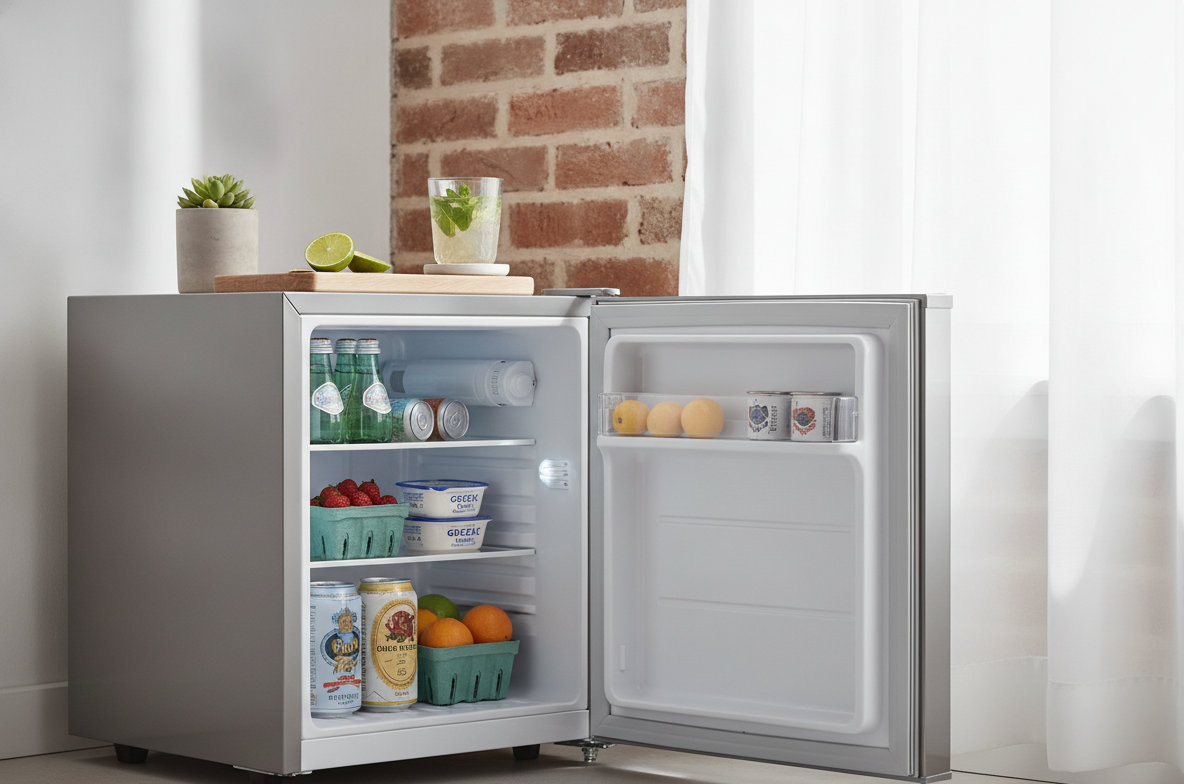
Whirlpool, KitchenAid, Maytag, Amana. Same kick plate design across the family. Two clips at the top of the grille, lift up and out. Coils are the standard bottom front layout. LG. Most LG French door fridges have the kick plate held by two Phillips screws at the corners. Coils are deep, the brush has to go in 12 inches or more. Don't forget the condenser fan behind the coils, it tends to be the dirtiest part. Samsung. Samsung kick plates often pop off without screws but have a hidden tab in the center, push up while pulling out. Coils are tightly packed, take your time. GE and GE Profile. Two screws on the kick plate. GE fridges are known for fan motor failures when the coils are neglected, so check the fan blade for caked dust at the same time. Haier. Same bottom front layout as the others. Haier kick plates are usually friction fit, just pull straight forward. Frigidaire and Electrolux. Some Frigidaires have the coils on the back instead of the bottom. Pull the fridge out and check before assuming bottom. Mini fridges (dorm size, Upstreman style). Coils are on the back, exposed. Just pull the fridge out and brush them off, no kick plate. Smaller condensers clog faster, every 3-4 months is reasonable.How often to clean
Standard rule: every 6 to 12 months. If you have shedding pets, go every 6 months or sooner. If your fridge sits on carpet or in a dusty basement, more often. The visible dust mat is a good cue, when you can see it, it's overdue. A 5 minute look every couple of months will tell you when it's time. You don't need to do the full pull and brush every time, just peek under the kick plate.Frequently asked questions
Where are the condenser coils on my fridge? Either at the bottom front behind a kick plate (most modern fridges) or on the back of the fridge (older models and most mini fridges). LG, Whirlpool, Samsung, GE, Haier, and Frigidaire all use the bottom front layout on most current models. Can I clean condenser coils without a brush? Yes, a vacuum with a thin attachment will get most of the loose dust. But a coil brush gets 3-4x more out, especially the matted layer that vacuums can't pull. The brush is $10 and lasts forever, worth it. How long does it take? Fifteen minutes from unplug to plug back in, including pulling the fridge out and putting it back. The actual brushing is 5 minutes. Will my fridge work better right after? Yes, immediately. The compressor will run hard for an hour to pull back to set temp, then cycle quieter than before. Energy savings show up on the next bill. What if my coils are bent? Bent fins from rough cleaning are mostly cosmetic. They block a tiny percent of airflow but not enough to matter. Don't bother with a fin comb on a household fridge. Do I need to clean the condenser fan too? The fan blade behind the coils collects dust on the leading edge. Give it a wipe with a dry cloth or a quick brush. A caked fan moves less air and undoes half the benefit of clean coils. How much energy does this actually save? 10-25% on the fridge's electricity draw, which is typically $5 to $15 a month for a standard fridge. The brush pays for itself in two months. Want to see if your fridge is running too long? See refrigerator not cooling but light is on for the next thing to check after coils. If the ice maker also stopped, the same dust buildup is often the cause, see ice maker not making ice.Our Recommendation
🏆 TOP PICK
25 Inch Flexible Refrigerator Coil and Dryer Vent Cleaning Brush
- Long flexible shaft reaches under the fridge and into the dryer vent without pulling the appliance out.
- Thick polyester bristles grab dust, lint, and pet hair off condenser coils.
- Works for fridges, dryers, radiators, baseboard heaters, anywhere lint and dust collect.
- Cheap insurance, runs about $10 and lasts years.
- Pair with a vacuum hose for best results.
Klein Tools NCVT1P Voltage Tester, Non-Contact Low Voltage Tester Pen, 50V to 1000V AC, Audible and Flashing LED Alarms, Pocket Clip
- NON-CONTACT DETECTION of AC voltage in cables, cords, circuit breakers, lighting fixtures, switches, non-tamper-resistant outlets, and wires
- CLEAR INDICATION: Bright LED illuminates green to indicate tester is operational and flashes red and emits a beeping alert when voltage is detected
- BROAD APPLICATION with a 50 to 1000V AC power detection range
- CONSERVE BATTERIES with auto power-off function
- LIGHTWEIGHT AND DURABLE compact design with a convenient clip fits securely in pocket; 6.6-Foot (2 m) drop protection