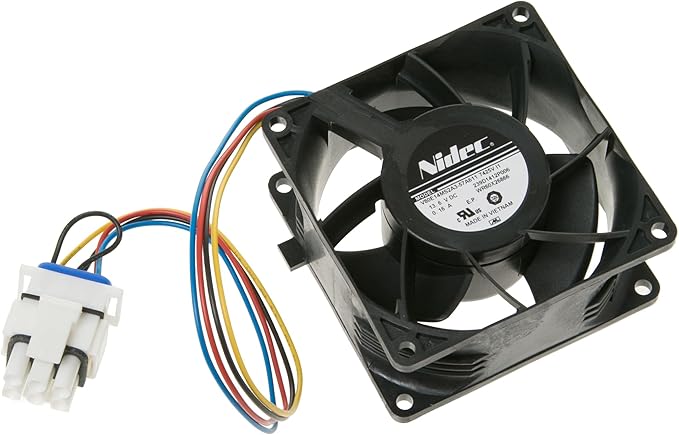
GE Appliances Refrigerator Evaporator Fan Motor WR60X26866, WR60X26033
- This evaporator fan motor (part number WR60X26866) is for refrigerators.
- CIRCULATES air through the fresh food compartment for efficient cooling.
- RESTORES the temperature and the proper operation of the device, save your time and money, better preserve.
- Replacement for numbers 239D1412P006, V80E14MS2A3-57A611, AP5985039 and PS11721915

Upgraded W10189703 Refrigerator Evaporator Fan Motor Ultra Durable - Compatible with Whirlpool Maytag Kenmore Refrigerators -
- 𝐈𝐌𝐏𝐎𝐑𝐓𝐀𝐍𝐓 𝐍𝐎𝐓𝐄: WR57X10051 Refrigerator Dual Inlet Water Valve. This part DOES NOT include any conversion.
- W10189703 Refrigerator Evaporator Fan Motor - Specs: 60 Hz, 120V, 3/4-inch shaft length, 1/3-inch shaft.
- Fit most of the top brands (Whirlpool, Kenmore, KitchenAid, Amana, Roper, Maytag, Estate, Crosley, Inglis.
- It is made exactly fit for most top name brands (Whirlpool, Kenmore, KitchenAid, Amana, Roper, Maytag.

BlueStars Premium WR60X10141 Refrigerator Evaporator Fan Motor Replacement - Compatible with G.E Hotpoint Fridges - Replaces
- 100% LIFETIME PROTECTION: Enjoy reliable performance with our lifetime protection, ensuring that your.
- WR60X10141 Refrigerator Evaporator Fan Motor (Specs: 60 Hz, 3W, 115V, 1 3/8-inch shaft length, 1/8-inch.
- It is made exactly fit for most top name brands (General Electric, Hotpoint) and replaces part numbers:.
- GE GTS15GBRFLWW, GTS15GBRFRWW, GTS16BBMBLCC, GTS16BBMBLWW, GTS16BBMBRCC, GTS16BBMBRWW, GTS16BBMDLCC.
Warm food inside your refrigerator, despite the appliance running, usually points to one of three main problems: a failing evaporator fan, dirty condenser coils, or a malfunctioning condenser fan. Many of these issues are simple to diagnose and fix at home, saving you a costly service call. Before calling a technician, try these troubleshooting steps.
Check the Temperature Settings and Door Seals
Sometimes the simplest solutions are the most effective. Verify your refrigerator's thermostat setting. It might have been accidentally bumped or changed. A typical refrigerator temperature should be set between 35°F (1.7°C) and 38°F (3.3°C).
Next, inspect the door seals, also known as gaskets. Warm air can enter the refrigerator if the seals are compromised, forcing the appliance to work harder and still not cool effectively. Close the door on a dollar bill or a piece of paper. If you can easily pull it out, the seal in that spot is weak. Repeat this test around the entire door. Worn-out door seals often need replacement. Replacing a refrigerator door gasket typically costs $50-$150 for the part, plus $80-$150 for a service call if you hire a professional.
Clean the Condenser Coils
The condenser coils are located either at the back of the refrigerator or underneath it, behind the kickplate. These coils release heat from the refrigerant. Over time, they collect dust, pet hair, and debris, which acts as an insulating layer. This buildup prevents the coils from dissipating heat efficiently, causing the refrigerator to struggle with cooling.
Quick Test: Pull your refrigerator away from the wall and look at the coils, or remove the kickplate at the bottom front. If they look dusty, they need cleaning.
The Fix: Disconnect the refrigerator from power. Use a vacuum cleaner with a brush attachment to remove dust and debris from the coils. For stubborn grime, a coil brush can be helpful. This is a free fix if you do it yourself. Regular cleaning, every 6-12 months, helps maintain efficiency. For detailed instructions, see our guide on how to clean refrigerator condenser coils.
Inspect the Condenser Fan Motor
The condenser fan works alongside the condenser coils. It draws air over the coils to help dissipate heat. If this fan motor fails, the refrigerator will not cool properly.
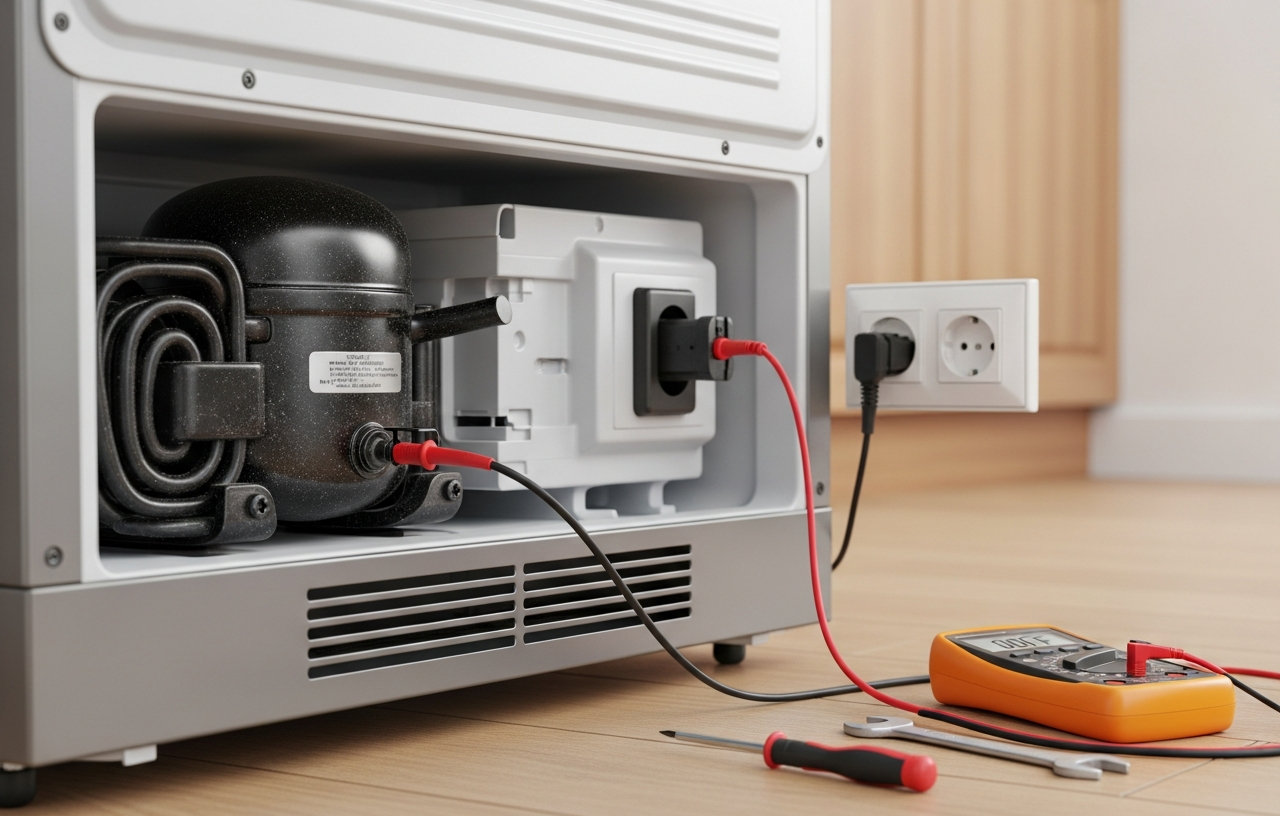
Quick Test: Disconnect power to the refrigerator. Remove the kickplate or access panel at the bottom rear where the coils are located. Manually try to spin the fan blades. They should spin freely. Look for any obstructions like debris or wires. Reconnect power and listen. If the fan does not spin when the compressor is running, or if it makes unusual noises, it likely needs replacement.
The Fix: Replace the condenser fan motor. This part typically costs $30-$100. Professional labor for this repair usually falls in the $150-$250 range, including the service call fee.
Troubleshoot the Evaporator Fan Motor
The evaporator fan motor is inside the freezer compartment. Its job is to circulate cold air from the freezer into the fresh food compartment. If this fan stops working, the freezer might remain cold, but the refrigerator section will get warm.
Quick Test: Open the freezer door and listen carefully. You should hear the fan running. If you do not hear it, or if it sounds weak or noisy, it could be faulty. Press the freezer door switch (the button that turns off the light when the door closes) to make the refrigerator think the door is closed. Listen for the fan to kick on. If it does not, the fan motor is likely the problem.
The Fix: Replacing the evaporator fan motor is a common repair for a refrigerator not cooling. The part itself costs around $50-$150. Labor and a service call can add another $100-$200.
Many models, including some Whirlpool refrigerators, use a similar evaporator fan design. For many GE Appliances refrigerators, the GE Appliances Refrigerator Evaporator Fan Motor WR60X26866 is a top pick for restoring proper cooling. This motor (part number WR60X26866, also replaces WR60X26033) is engineered to circulate air efficiently through the fresh food compartment. It helps restore the correct temperature and operation of the device. Another option, compatible with many Whirlpool, Maytag, and Kenmore refrigerators, is the Upgraded W10189703 Refrigerator Evaporator Fan Motor Ultra Durable. This part features specs of 60 Hz, 120V, and a 3/4-inch shaft length, fitting numerous top brands.
Address Defrost System Issues
Refrigerators have an automatic defrost system that prevents ice buildup on the evaporator coils. If components of this system fail (defrost heater, defrost thermostat, or defrost timer), ice can accumulate. This thick layer of ice blocks airflow over the evaporator coils, preventing cold air from reaching the refrigerator compartment.
Quick Test: Unplug the refrigerator and empty the freezer. Remove the back panel inside the freezer compartment to expose the evaporator coils. If they are covered in a significant amount of ice, the defrost system is malfunctioning. You may notice this problem if your refrigerator not cooling but light is on.
The Fix: Manually defrost the coils by unplugging the unit for 24-48 hours with the doors open, or use a hairdryer on a low setting (be careful not to melt plastic components). This is a temporary solution. To fix the underlying issue, you need to identify and replace the faulty defrost component. A defrost timer or thermostat typically costs $20-$50. A defrost heater can range from $50-$150. Professional repair can cost $200-$400 due to the labor involved in diagnostics and replacement.
Consider the Start Relay or Compressor
The compressor is the heart of your refrigerator's cooling system. It compresses refrigerant gas, circulating it through the coils. The start relay provides the initial electrical boost to get the compressor running.
Quick Test: Listen for the compressor. It is usually located at the bottom rear of the refrigerator. If you hear a clicking sound every few minutes, but the compressor does not run, the start relay might be failing. If you hear nothing, or if the compressor hums but does not start, the compressor itself could be the issue.
The Fix: Replacing a start relay is relatively inexpensive, typically $20-$80 for the part. A professional can do this for $150-$250. A failing compressor, however, is a major repair. Compressor replacement costs can range from $300-$600 for the part alone, with total professional costs often exceeding $500-$800, sometimes even approaching the cost of a new refrigerator. At this point, many homeowners opt for a new appliance.
RV Refrigerator Not Cooling: Specific Considerations
RV refrigerators, also known as camper fridges, often use absorption cooling technology instead of the compressor-based systems found in most home refrigerators. This means troubleshooting an RV fridge not cooling requires different steps.
Leveling for RV Refrigerators
An RV refrigerator will not cool efficiently if the RV is not level. Absorption cooling relies on gravity for the refrigerant to flow properly through its system. Even a slight tilt can disrupt this flow. Make sure your RV is as level as possible, both front-to-back and side-to-side.
Check Power Source (AC vs. LP Gas)
Most RV refrigerators can operate on either AC electricity (shore power or generator) or LP gas. If your fridge in RV not cooling, test both modes.
- AC Mode: Verify the RV is connected to a working power source and check the circuit breaker.
- LP Gas Mode: Make sure the propane tank has gas, the valve is open, and the pilot light (if applicable) is lit or the igniter is sparking. Listen for the faint sound of gas burning. A common issue with a Norcold RV refrigerator not cooling is a problem with the igniter or gas flow.
RV Refrigerator Ventilation
Absorption refrigerators generate heat that must escape for efficient cooling. Check the exterior vents on your RV. Make sure they are not blocked by debris, nests, or anything else. Poor ventilation can cause an RV refrigerator not getting cold, even if all other components are working.
Heating Elements and Burner for RV Fridges
In AC mode, the refrigerator uses an electric heating element. In LP gas mode, it uses a gas burner. If either of these fails, the cooling process stops. A common sign an RV refrigerator will not cool is if the cooling unit gets hot but the inside remains warm. Inspect the burner assembly for soot or blockages if using LP gas. For the electric heating element, you might need a multimeter to test for continuity. This requires some electrical knowledge and an electrical test kit.
RV refrigerator repairs can be complex. While some fixes are DIY, issues with the cooling unit itself usually require professional help. RV repair service calls can range from $100-$200, plus parts and labor.
Final Thoughts on Troubleshooting a Refrigerator Not Cooling
Diagnosing why your refrigerator is not cooling involves a systematic approach. Start with the simplest checks, like temperature settings and door seals, before moving to internal components. Many problems, such as dirty coils or a faulty evaporator fan, are within the scope of a homeowner to fix. Always unplug the appliance before performing any internal inspections or repairs. If you are unsure or uncomfortable with a particular step, contact a qualified appliance technician.
GE Appliances Refrigerator Evaporator Fan Motor WR60X26866, WR60X26033
- This evaporator fan motor (part number WR60X26866) is for refrigerators.
- CIRCULATES air through the fresh food compartment for efficient cooling.
- RESTORES the temperature and the proper operation of the device, save your time and money, better preserve.
- Replacement for numbers 239D1412P006, V80E14MS2A3-57A611, AP5985039 and PS11721915
Upgraded W10189703 Refrigerator Evaporator Fan Motor Ultra Durable - Compatible with Whirlpool Maytag Kenmore Refrigerators -
- 𝐈𝐌𝐏𝐎𝐑𝐓𝐀𝐍𝐓 𝐍𝐎𝐓𝐄: WR57X10051 Refrigerator Dual Inlet Water Valve. This part DOES NOT include any conversion.
- W10189703 Refrigerator Evaporator Fan Motor - Specs: 60 Hz, 120V, 3/4-inch shaft length, 1/3-inch shaft.
- Fit most of the top brands (Whirlpool, Kenmore, KitchenAid, Amana, Roper, Maytag, Estate, Crosley, Inglis.
- It is made exactly fit for most top name brands (Whirlpool, Kenmore, KitchenAid, Amana, Roper, Maytag.
BlueStars Premium WR60X10141 Refrigerator Evaporator Fan Motor Replacement - Compatible with G.E Hotpoint Fridges - Replaces
- 100% LIFETIME PROTECTION: Enjoy reliable performance with our lifetime protection, ensuring that your.
- WR60X10141 Refrigerator Evaporator Fan Motor (Specs: 60 Hz, 3W, 115V, 1 3/8-inch shaft length, 1/8-inch.
- It is made exactly fit for most top name brands (General Electric, Hotpoint) and replaces part numbers:.
- GE GTS15GBRFLWW, GTS15GBRFRWW, GTS16BBMBLCC, GTS16BBMBLWW, GTS16BBMBRCC, GTS16BBMBRWW, GTS16BBMDLCC.