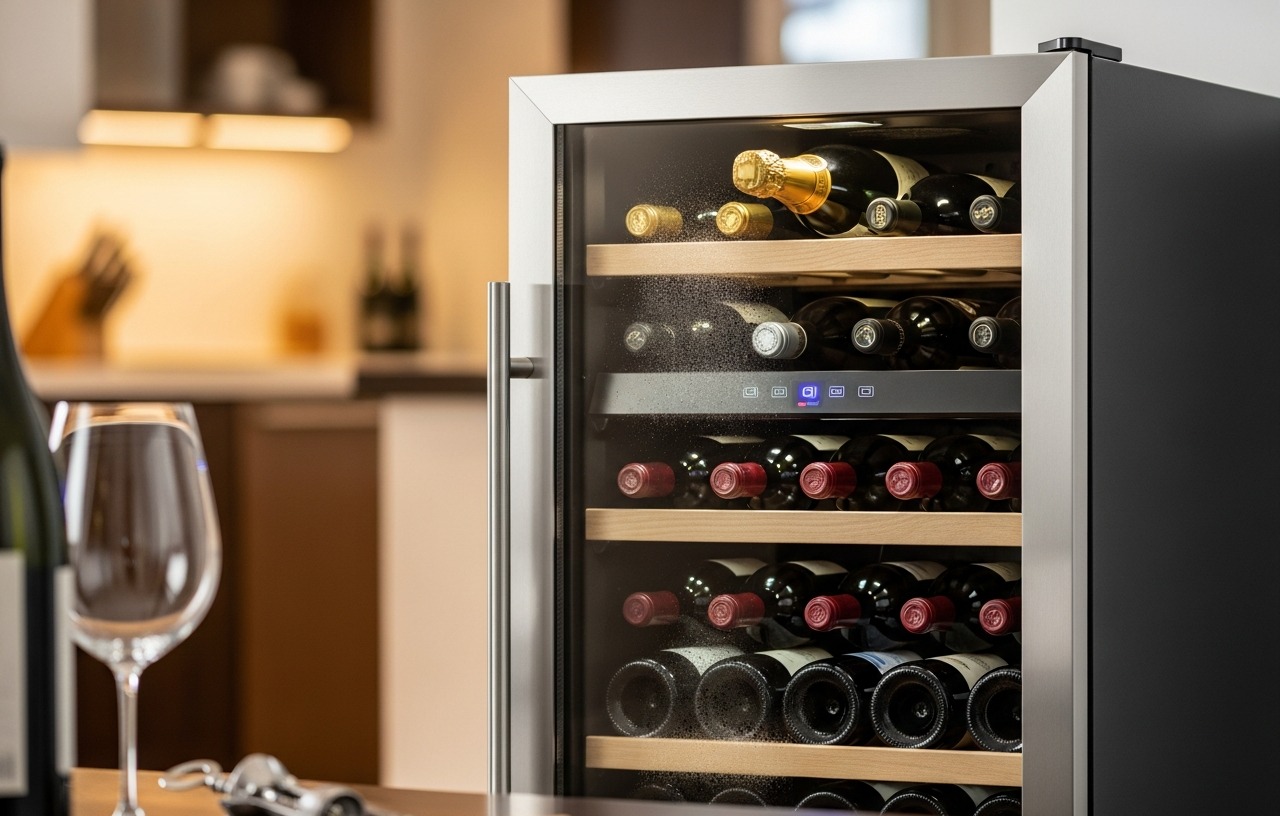

Wine Enthusiast 18-Bottle Slimline Dual Zone Wine Cooler - Energy Efficient Freestanding Wine Refrigerator - Upright Bottle
- Small Storage Solution: The 18-Bottle Slimline is a perfect solution for wine lovers who have limited.
- Energy-Efficient Cooling: This cooler features state of the art solid-state cooling technology that is 65%.
- Dual Temperature Zones: The top zone holds 8 bottles and can be adjusted from 54-66°F, providing the ideal.
- Touchscreen Control: Enjoy effortless control over and maximum flexibility of the internal temperature of.

SCHMÉCKÉ 33 Bottle Dual Zone Wine Cooler Refrigerator w/Lock - Large Freestanding Wine Cellar For Red, White, Champagne &
- Schmécké wine coolers’ compressor technology ensures temperature is not affected by outside heat sources.
- PRESERVE WINE’S FULLEST FLAVOR & AROMA - Set the temperature and let the wine cooler do the rest. With.
- UV-RESISTANT DOUBLE-PANED THERMOPANE GLASS - A double-paned glass door not only keeps the interior.
- Turn on the energy-efficient LED light to gently illuminate your collection. Say goodbye to harsh.
A dual zone wine cooler is a specialized refrigeration unit that creates two distinct temperature-controlled compartments within a single appliance. This design allows users to store different types of wine, such as red and white, at their optimal serving or long term storage temperatures simultaneously, preventing the detrimental effects of improper temperature on wine quality. Improper storage can accelerate a wine's aging process or strip it of its intended flavors and aromas.
What is a Dual Zone Wine Cooler?
A dual zone wine cooler, often called a dual zone wine fridge, separates its internal space into two independently regulated temperature zones. This setup contrasts with single-zone coolers which maintain one uniform temperature throughout. The primary purpose is to accommodate the diverse temperature requirements of various wine types. Red wines generally benefit from warmer storage, typically between 55-65°F (12-18°C), while white wines and sparkling varieties require colder conditions, usually 45-55°F (7-12°C).
These units come in various sizes, ranging from compact models holding 12-20 bottles to large freestanding units capable of storing over 150 bottles. The ability to maintain two precise temperatures within one appliance makes a dual zone wine cooler a practical solution for wine enthusiasts with varied collections. It protects the integrity of each bottle, making sure it is ready to serve at its best.
The Importance of Temperature Stability for Wine
Wine is sensitive to temperature changes. Fluctuations can cause the cork to expand and contract, allowing air to seep into the bottle and oxidize the wine. This process quickly degrades the wine's quality, leading to a flat taste. A consistent temperature, like that offered by a dual zone wine cooler, significantly extends the life and improves the enjoyment of your wine collection.
How Does a Dual Zone Wine Cooler Work?
The operation of a dual zone wine cooler depends on its cooling technology and how it manages temperature separation.
Cooling Mechanisms
- Compressor-Based Systems: Most dual zone wine refrigerators use compressor technology, similar to a standard kitchen refrigerator. A compressor circulates refrigerant through a sealed system, including an evaporator, condenser, and expansion valve. This cycle efficiently removes heat from the interior. Compressor models are powerful, suitable for larger capacities, and perform well even in warmer ambient conditions. They can produce some vibration and noise, though many models include vibration dampening technology.
- Thermoelectric (Peltier Effect) Systems: Smaller, often countertop dual zone coolers may use thermoelectric cooling. This method involves a Peltier module that transfers heat from one side to the other when an electric current passes through it. Thermoelectric coolers are quieter and produce less vibration than compressor models, making them ideal for delicate wines. However, they are less powerful, less energy-efficient, and their cooling capacity is more affected by room temperature.
Temperature Separation
Regardless of the cooling mechanism, dual zone wine coolers achieve their two distinct temperature environments through internal design. This typically involves an insulated divider separating the two compartments. Each zone has its own thermostat and temperature sensor, allowing for independent control. Some advanced systems might use separate cooling circuits for each zone. Others use a single cooling system with a fan and damper mechanism to direct cold air to the appropriate zone based on its temperature setting. The internal fans circulate air within each zone, making sure temperatures remain consistent from top to bottom.
Benefits of a Dual Zone Wine Cooler
Choosing a dual zone wine cooler offers several advantages for wine storage and enjoyment.
- Optimal Preservation: The most significant benefit is the ability to store different wines at their ideal temperatures. This protects them from the damaging effects of heat, cold, and temperature swings, preserving their flavor, aroma, and color over time.
- Ready-to-Serve Wines: Your red and white wines are always chilled to their perfect serving temperatures. This eliminates the wait time for bottles to cool or warm up, making spontaneous enjoyment possible.
- Versatility for Diverse Collections: If your collection includes a mix of red, white, rosé, and sparkling wines, a dual zone unit provides the versatility needed to accommodate all types properly within a single appliance.
- Space Efficiency: Instead of purchasing two separate wine coolers, a dual zone model consolidates your storage needs, saving floor space in your kitchen, dining area, or basement.
- Enhanced Aesthetics: Many dual zone wine refrigerators feature attractive designs, often with stainless steel trim, wooden shelves, and soft LED lighting. The ideal settings depend on whether you are storing wine long term or chilling it for immediate serving.
- Red Wines: For serving, red wines are best at 55-65°F (12-18°C). Fuller-bodied reds like Cabernet Sauvignon or Merlot often show best at the warmer end, 60-65°F. Lighter reds, such as Pinot Noir, are better at 55-60°F. For long term storage of all red wines, a consistent 55°F (12°C) is generally considered ideal.
- White Wines: White wines typically require colder serving temperatures, ranging from 45-55°F (7-12°C). Oaked Chardonnays might be served at 50-55°F, while crisp Sauvignon Blancs or Pinot Grigios are more refreshing at 45-50°F. For long term storage, 55°F (12°C) is still a good guideline.
- Sparkling Wines: Champagne and other sparkling wines are best served very cold, usually between 40-45°F (4-7°C). One zone in your dual zone wine fridge can be set to this colder range for optimal bubbly enjoyment.
Most dual zone wine coolers feature digital thermostats, allowing for precise temperature adjustments. It is common to set one zone for long term storage at 55°F and the other for ready-to-serve whites or sparkling wines at 45-50°F.
Key Features of Dual Zone Wine Refrigerators
Beyond the dual temperature zones, several features contribute to the effectiveness and user experience of a wine cooler.
- Shelving: Shelves are typically made from wood (like cedar or oak) or metal wire. Wooden shelves often absorb vibrations better, a key factor for wine aging. Roll-out shelves provide easy access without disturbing other bottles. Make sure the spacing accommodates various bottle shapes, including wider Burgundy or Champagne bottles.
- UV-Resistant Glass Doors: Exposure to ultraviolet (UV) light can prematurely age and damage wine. Many wine coolers feature tinted or double-paned, UV-resistant glass doors to filter out harmful light while still allowing you to view your collection.
- Internal Lighting: LED lighting is preferred because it emits very little heat, preventing temperature spikes. This soft illumination allows you to identify bottles without opening the door.
- Humidity Control: Some advanced dual zone wine refrigerators include a humidity control system, aiming to maintain relative humidity between 50-70%. This prevents corks from drying out and shrinking, which could allow air to enter the bottle.
- Vibration Reduction: Minimizing vibration is essential for long term wine storage. Quality units use specialized compressor mounts and sturdy construction to dampen vibrations that can disrupt a wine's natural aging process.
- Security Lock: A built-in lock can prevent accidental temperature changes or unauthorized access, especially useful in homes with children.
- Temperature Alarms: Alarms that sound if the door is left ajar or if temperatures deviate significantly from their set points offer an extra layer of protection for your valuable wine.
Common Issues and Troubleshooting
Even the best dual zone wine coolers can experience problems. Many issues are minor and can be resolved with simple troubleshooting.
Not Cooling Properly
If your wine cooler is not maintaining its set temperatures, start with these checks:
- Power Supply: Make sure the unit is plugged into a functional outlet and that the circuit breaker has not tripped.
- Dirty Condenser Coils: Dust and debris on the condenser coils can hinder heat dissipation, reducing cooling efficiency. Clean them annually. This is a common issue for many refrigerators, and cleaning the coils often restores performance. For guidance, see How to clean refrigerator condenser coils.
- Blocked Vents: Internal or external vents must be clear for proper airflow. Make sure nothing is blocking them.
- Door Seal Integrity: A faulty door gasket allows cold air to escape. Inspect the seals for cracks or gaps. A new door gasket might cost $20-$50 for the part.
- Thermostat or Sensor Issues: The thermostat or temperature sensors might be faulty, providing incorrect readings to the control board. Replacing a thermostat could cost $30-$70 for the part.
- Fan Motor Failure: The evaporator fan circulates cold air inside, and the condenser fan cools the compressor. If either fails, cooling suffers. A replacement fan motor can cost $30-$100 for the part.
- Compressor Failure: This is a more serious issue, often requiring professional service. A failing compressor can lead to complete cooling loss. For general refrigeration cooling problems, consult Refrigerator Not Cooling But Light Is On? DIY Troubleshooting Guide.
Excessive Noise
Unusual noises can indicate a problem:
- Vibration: Make sure bottles are not rattling against each other or the shelves. Level the unit to reduce vibrations.
- Fan Noise: A failing evaporator or condenser fan motor can produce grinding or squealing sounds.
- Compressor Noise: A loud humming or clunking from the compressor might signal it is struggling or failing.
Temperature Fluctuations
If temperatures are inconsistent, check the door seal. If the seals are fine, the issue might be with a faulty temperature sensor or the control board. A new control board for a wine cooler can range from $100-$300.
Water Leaking
Water leaks often result from a clogged drain tube, preventing condensation from evaporating or draining properly. Clear any obstructions in the drain tube.
Maintenance Tips for Your Dual Zone Wine Cooler
Regular maintenance prolongs the life and efficiency of your dual zone wine cooler.
- Clean Condenser Coils: At least once a year, or every six months if you have pets, clean the condenser coils. Use a vacuum cleaner with a brush attachment to remove dust and pet hair. This simple task significantly improves cooling performance and reduces energy consumption.
- Inspect and Clean Door Seals: Regularly check the door gaskets for any tears, cracks, or gaps. Clean them with a mild soap and water solution to remove grime that can compromise the seal. A tight seal is critical for maintaining stable internal temperatures.
- Assure Proper Ventilation: Make sure the wine cooler has adequate clearance around its sides, back, and top. For freestanding models, usually 2-3 inches on sides and back, and 6 inches on top are recommended for proper heat dissipation. Built-in models have specific ventilation requirements.
- Clean the Interior: Periodically wipe down the interior surfaces and shelves with a damp cloth and mild cleanser. Remove any spills promptly to prevent odors.
- Level the Unit: Use a carpenter's level to make sure your wine cooler sits perfectly even. Proper leveling helps the door seals close tightly and reduces stress on the compressor, which can extend its lifespan.
Implementing these maintenance steps can help prevent common issues and keep your dual zone wine cooler running efficiently for many years. For a comprehensive overview of appliance care, review a Home appliance maintenance checklist.