
Upgrade DC97-15459H Water Inlet Valve For Samsung Washer WA50R5200AW/US WA45H7000AW/A2 WA45M7050AW WA400PJHDWR/AA WA50R5400AV/US,
- What You Will Get? 1 x DC97-15459H Washer Water Valve Assembly. The DC97-15459H water inlet valve controls.
- Replaces Part Numbers: Washer inlet valve DC97-15459H Replaces AP5621731 PS4220862 EAP4220862. DC97-15459H.
- Samsung Washer Water Inlet Valve: Fits models - WA400PJHDWR/AA-01, WA400PJHDWR/AA-02, WA400PJHDWR/AA-03.
- Fix the Following Symptoms: Can not stop water intake. The Washer does not feed water. Leakage at water.
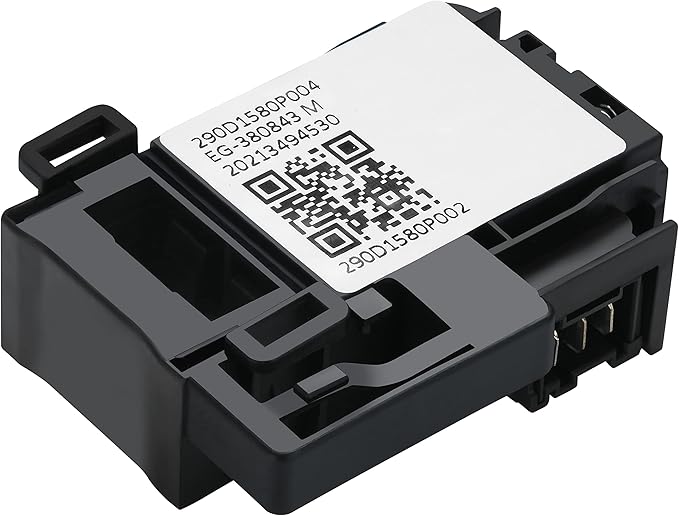
WH01X27954 Washer Lid Lock Switch Replace 290D1580P004 290D1580P002 WH01X24114 WH01X26114 Compatible for GE Washer Lid Lock
- Check Compatible Model List: Please check if your washer model is listed in the Compatible Model list of.
- Replacement Part Numbers: HPUY WH01X27954 Washer Lid Lock Switch replaces part numbers WH01X26114.
- Wide Compatibility: Designed to fit a range of GE Hotpoint washers including models such as GTW220ACK1WW.
- Durable Construction: Made from durable materials, this washer lid lock switch ensures long-lasting.

【UPGRADED】W11165546 W10758828 Washer Water Inlet Valve - Compatible with Maytag &Whirlpool Washing Machine wm0642hw wm0642hw
- W11165546 W11096267 Valve :Washer Water Inlet Valve W11165546 With Mounting Bracket, precisely controlling.
- Powerful Performance Analysis:The W11165546 inlet valve with a mounting bracket is responsible for filling.
- Fits Models:Water inlet valve w11165546 fits modols:mvwb765fw1 lav3600aww mvwb765fw0 mvwb765fw2 mvwb835dw3.
- EASY DIY FIX -- It’s an easy repair for w11096267 whirl.pool if you follow along with a repair video.
Water rushes into the drum, then abruptly stops. Your washing machine fills with water then stops, leaving clothes sitting in stagnant water or barely damp. This common issue prevents your laundry cycle from completing, but many causes are simple to diagnose and fix yourself. Understanding why your washer fills up then stops is the first step to getting it running properly again. Always unplug your washing machine from the wall outlet before beginning any inspection or repair work.
1. Faulty Lid Switch or Lid Lock Assembly
One of the most frequent reasons a washing machine fills with water then stops is a faulty lid switch or lid lock assembly. If the switch malfunctions, the machine's control board will not register the lid as closed, halting the cycle after the initial fill. The washer receives power, starts to fill, but then stops because it thinks the lid is still open and cannot proceed to agitation or spin.
To check the lid switch, first unplug your washer from its power source. On top-load models, the switch is usually located under the main top, near the lid opening, or integrated into the lid frame itself. Inspect it for visible damage, such as a broken plunger or cracked plastic. If the lid switch has a plunger that the lid presses down, make sure it moves freely and is not stuck. You can test the switch's continuity with a multimeter. A working switch should show continuity when the lid is closed (or the plunger is manually pressed) and no continuity when open. If there is no continuity when it should be closed, the switch is bad.
A new lid switch or lid lock assembly typically costs $20 to $50 for the part. Professional installation adds $100 to $200 in labor. For many GE washers, the WH01X27954 Washer Lid Lock Switch is a direct replacement, designed to fit various models including the GTW220ACK1WW. Replacing this component is a common DIY fix that often resolves the problem when your washer fills with water then stops.
2. Defective Water Inlet Valve
Another common culprit for a washing machine that fills with water then stops is a defective water inlet valve. This component controls the flow of hot and cold water into the wash tub. It contains solenoids that open and close based on electrical signals from the control board. If a solenoid coil fails, the valve might not open fully, or it might close prematurely, causing the washer to stop filling before the desired water level is reached. You might notice the washer starts to fill then stops after only a short amount of water enters the tub.
You can visually inspect the valve for corrosion or mineral buildup around the screens where the water hoses connect. These screens can become clogged, restricting water flow. Remove the water hoses and clean any debris from the screens. If the screens are clear, use a multimeter to test the resistance of each solenoid on the valve. Refer to your washer's service manual for the correct resistance values. A reading outside the specified range, or an open circuit, indicates a faulty solenoid. If one or both solenoids are bad, the entire water inlet valve assembly needs replacement.
Replacing the water inlet valve is a moderately difficult DIY task. The part itself costs between $30 and $80. If you call a technician, expect to pay $100 to $250 for labor on top of the part cost. For Samsung washers, the Upgrade DC97-15459H Water Inlet Valve is a TOP PICK, controlling water flow for models such as the WA50R5200AW/US and WA45H7000AW/A2. Owners of Maytag and Whirlpool washing machines might find the W11165546 W10758828 Washer Water Inlet Valve to be a suitable replacement for models like the MVWB765FW1.
3. Faulty Pressure Switch or Water Level Sensor
The pressure switch, also known as the water level sensor, tells the control board how much water is in the tub. It connects to a small air trap hose at the bottom of the tub. As water fills, air pressure builds in the hose, activating the switch. If this switch is faulty, it might incorrectly signal that the tub is full, or not full enough, causing the washing machine to fill with water then stops prematurely or not start the agitation phase. The washer believes it has reached its target water level, even if it has not, and halts the fill.
To check the pressure switch, first disconnect the hose from the switch and inspect it for clogs or kinks. A clogged hose will prevent accurate pressure readings. Blow gently into the hose to make sure it is clear and that air can travel freely to the tub's air trap. If the hose is clear, the switch itself might be defective. You can test it for continuity changes with a multimeter as you blow into the port. A new pressure switch typically costs $20 to $40. A professional repair will add $100 to $200 for labor.
4. Clogged Drain Pump or Hose
While less common for a washer that fills then stops immediately, a problem with the drain system can sometimes trick the control board into halting the cycle. If the machine attempts to drain prematurely due to a misread signal or a faulty component, or if the drain pump itself is failing, it might disrupt the fill cycle. A truly clogged drain line usually results in the washer filling but never draining. However, a failing drain pump could cause intermittent issues or incorrect feedback to the control board, leading to a sudden stop.
Check the drain hose for kinks or blockages. Make sure it is not pushed too far down the standpipe, which can create a siphon effect. Inspect the drain pump filter for debris like coins or lint. These blockages can prevent proper water circulation or drainage. If the pump runs but no water moves, or if it makes unusual noises, it may be failing. A replacement drain pump costs $30 to $100. Professional installation runs $120 to $250. If your washer is struggling to drain at all, you might find useful tips in our guide on washing machine leaking from the bottom on spin, as drain issues can sometimes manifest in unexpected ways.
5. Faulty Main Control Board or Timer
The main control board, or timer on older mechanical models, acts as the brain of your washing machine. It sends signals to all components, orchestrating the wash cycle. If this board malfunctions, it can send incorrect commands or fail to send any commands at all, resulting in your washer filling up then stopping without warning. This is a less common cause than a lid switch or water inlet valve, but it is a more complex and expensive repair.
Diagnosing a faulty control board often requires advanced troubleshooting skills and a service manual specific to your model. Look for visible signs of damage, like burn marks or corroded circuits on the board itself. If no other component is at fault after thorough testing, the control board is a strong suspect. Replacement control boards range from $100 to $300 or more, depending on the washer model and brand. Labor costs for this repair can be $150 to $300, making it a significant expense. Consider the age of your washing machine when facing such a repair.
6. Broken Motor Coupling or Motor (Whirlpool Specific)
For some direct-drive Whirlpool washing machines, a broken motor coupling can explain why the washing machine starts to fill and then stops. The motor coupling connects the motor to the transmission, allowing the motor to agitate and spin the clothes. If this plastic or rubber coupling breaks, the motor may run, but the agitator will not move, and the machine will halt the cycle. You might hear the motor hum, but no other action occurs after the initial fill, causing your whirlpool washer fills with water then stops.
Accessing and inspecting the motor coupling involves tilting or laying the washer down. The coupling is typically inexpensive, costing $15 to $30. Replacing it is a moderate DIY task. If the motor itself is failing, it is a more expensive repair, with parts ranging from $150 to $300 and labor from $150 to $350. If your washing machine won't spin clothes dry, a faulty motor or coupling could also be the cause, as detailed in our guide on washing machine won't spin clothes dry.
7. Intermittent Power Supply Issues
While rare for a washer that fills but then stops, intermittent power supply issues can sometimes cause unexpected halts in a wash cycle. A loose plug, a partially tripped circuit breaker, or even a faulty wall outlet could lead to a sudden loss of power, interrupting the wash. This is more likely to cause the machine to stop completely and not restart without intervention, but it is a fundamental check to rule out before deeper troubleshooting. If your washer starts to fill then stops and then loses all power, this is a likely cause.
Check your circuit breaker panel to make sure the breaker for the laundry room is fully engaged. Sometimes a breaker can trip partially and appear to be on. Test the outlet with another appliance if possible to confirm it is supplying consistent power. If you suspect deeper electrical issues, consulting an electrical test kit review can help you understand safe troubleshooting practices, but for serious electrical faults, a qualified electrician is necessary. Do not attempt electrical repairs beyond simple outlet checks if you are not experienced.
When to Call a Professional
Deciding when to call a professional appliance technician depends on your comfort level with DIY repairs, the complexity of the issue, and the cost of parts. Hourly rates for technicians usually fall between $75 and $150. If the total repair cost, including parts and labor, approaches or exceeds 50% of the cost of a new washing machine, consider replacing the appliance entirely. Sometimes, investing in a new, more energy-efficient model makes more financial sense than repairing an older unit with a costly problem.
Conclusion
A washing machine that fills with water then stops is a frustrating problem, but often one with a relatively simple solution. By systematically checking the lid switch, water inlet valve, and pressure switch, you can diagnose and potentially fix the issue yourself. Always prioritize safety by unplugging the appliance before any inspection or repair. Careful diagnosis can save you money and extend the life of your washing machine, getting your laundry routine back on track.
Upgrade DC97-15459H Water Inlet Valve For Samsung Washer WA50R5200AW/US WA45H7000AW/A2 WA45M7050AW WA400PJHDWR/AA WA50R5400AV/US,
- What You Will Get? 1 x DC97-15459H Washer Water Valve Assembly. The DC97-15459H water inlet valve controls.
- Replaces Part Numbers: Washer inlet valve DC97-15459H Replaces AP5621731 PS4220862 EAP4220862. DC97-15459H.
- Samsung Washer Water Inlet Valve: Fits models - WA400PJHDWR/AA-01, WA400PJHDWR/AA-02, WA400PJHDWR/AA-03.
- Fix the Following Symptoms: Can not stop water intake. The Washer does not feed water. Leakage at water.
WH01X27954 Washer Lid Lock Switch Replace 290D1580P004 290D1580P002 WH01X24114 WH01X26114 Compatible for GE Washer Lid Lock
- Check Compatible Model List: Please check if your washer model is listed in the Compatible Model list of.
- Replacement Part Numbers: HPUY WH01X27954 Washer Lid Lock Switch replaces part numbers WH01X26114.
- Wide Compatibility: Designed to fit a range of GE Hotpoint washers including models such as GTW220ACK1WW.
- Durable Construction: Made from durable materials, this washer lid lock switch ensures long-lasting.
【UPGRADED】W11165546 W10758828 Washer Water Inlet Valve - Compatible with Maytag &Whirlpool Washing Machine wm0642hw wm0642hw
- W11165546 W11096267 Valve :Washer Water Inlet Valve W11165546 With Mounting Bracket, precisely controlling.
- Powerful Performance Analysis:The W11165546 inlet valve with a mounting bracket is responsible for filling.
- Fits Models:Water inlet valve w11165546 fits modols:mvwb765fw1 lav3600aww mvwb765fw0 mvwb765fw2 mvwb835dw3.
- EASY DIY FIX -- It’s an easy repair for w11096267 whirl.pool if you follow along with a repair video.


