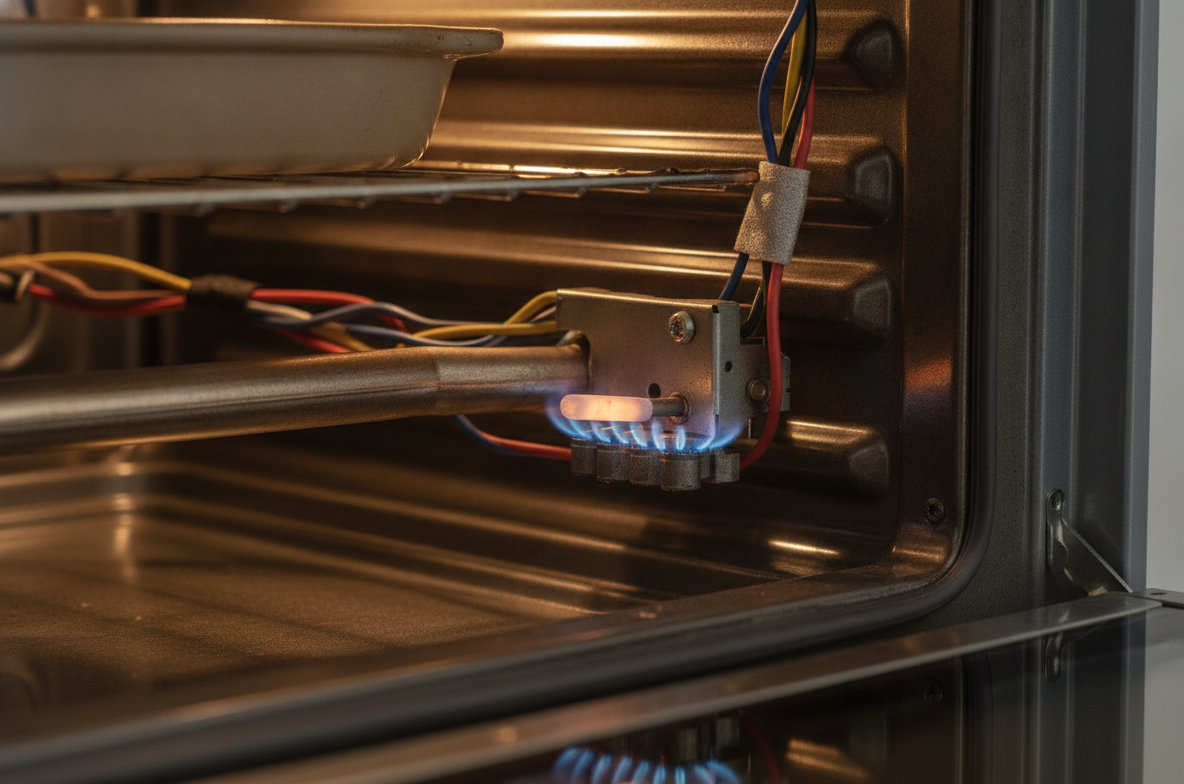
A gas oven igniter's core function is to heat up, drawing enough electrical current to open the oven's main gas valve. This precise sequence creates a stable flame for baking and roasting. Without a properly functioning igniter, the oven will not heat, or it will heat slowly and inefficiently. This component is a small but critical part of a gas oven's heating system.
Understanding How a Gas Oven Igniter Works
Most gas ovens rely on a hot surface igniter (HSI) for burner ignition. This differs from the spark igniters often found on gas stovetop burners, which generate a visible spark. An oven's HSI is typically made of silicon carbide or silicon nitride, materials designed to heat rapidly and conduct electricity in a specific way. The entire process hinges on a delicate balance of electrical current and temperature.
The Role of the Control Board
When you set your oven to a specific temperature, the control board initiates the ignition cycle. This board, essentially the oven's brain, sends 120 volts of alternating current (AC) to the hot surface igniter. This voltage causes the igniter to begin heating. As the igniter heats, its electrical resistance decreases. This drop in resistance allows more current to flow through it. The control board continuously monitors this current flow.
The Gas Valve and Flame Sensor
The main gas safety valve, located near the burner, is a critical component. It contains a bi-metal switch that is directly linked to the igniter's current draw. The valve remains closed until the igniter reaches a specific temperature and draws sufficient current. Once the current reaches a calibrated threshold, typically between 2.5 and 3.2 amps, the bi-metal switch inside the gas valve energizes and opens. This action allows gas to flow from the main supply line to the oven burner.
The hot surface igniter also functions as a flame sensor. It remains energized and glowing throughout the baking cycle. If the flame goes out for any reason, the current draw through the igniter will drop below the safe operating threshold. When this happens, the control board recognizes the absence of a flame, de-energizes the bi-metal switch, and closes the gas valve, preventing raw gas from accumulating in the oven cavity. This safety mechanism is designed to prevent gas leaks and potential explosions.
The Ignition Sequence: step by step
Understanding the exact steps helps in diagnosing issues. This is how a gas oven igniter works:
- Temperature Set: The user selects a desired temperature on the oven's control panel.
- Voltage to Igniter: The oven's control board sends 120V AC to the hot surface igniter.
- Igniter Heats Up: The igniter begins to glow a dull orange, then brightens as it gets hotter. Its electrical resistance drops during this phase.
- Current Draw Monitored: The control board monitors the current flowing through the igniter.
- Gas Valve Opens: Once the current reaches the necessary 2.5 to 3.2 amp threshold, the bi-metal switch in the gas safety valve opens. Gas flows to the burner.
- Gas Ignites: The superheated igniter ignites the gas, producing a flame around the burner.
- Flame Sustained: The igniter continues to glow, acting as a flame sensor to keep the gas valve open and the flame burning.
- Temperature Maintained: When the oven reaches the set temperature, the control board cycles the gas burner off. When the temperature drops, the cycle repeats.
Common Symptoms of a Failing Oven Igniter
A failing igniter is one of the most common reasons a gas oven stops heating properly. Here are symptoms to watch for:
- Oven Not Heating At All: The most obvious sign. If the igniter does not glow or does not draw enough current, the gas valve will not open, and no flame will appear.
- Slow Preheating: If the oven takes an unusually long time to reach temperature, the igniter might be weak. It could be glowing, but not drawing enough current to open the gas valve quickly or fully. This leads to intermittent ignition or a small, inefficient flame.
- Oven Heats Intermittently: The oven heats for a while, then stops, and eventually starts heating again. This suggests the igniter is struggling to maintain the required current draw.
- Gas Smell Without Ignition: If you smell gas but the burner does not light within 30-60 seconds, turn the oven off immediately. This indicates gas is flowing but not igniting, which can be dangerous. A faulty igniter is a likely cause. You can find more specific troubleshooting for this scenario in our guide, Gas Oven Igniter Clicks But Won't Light: Top Fixes.
- Weak or Irregular Glow: Visually inspect the igniter. A healthy igniter glows bright orange or white. A weak, dull orange glow, or a flickering glow, often points to a failing igniter.
Diagnosing a Faulty Oven Igniter
Diagnosing an oven igniter often involves visual inspection and electrical testing. Always disconnect power to the oven before performing any inspections or tests.
Visual Inspection
Carefully observe the igniter when the oven is set to bake. Does it glow brightly and consistently? Or is it dull, flickering, or not glowing at all? A visible crack or powdery appearance on the igniter element also indicates failure.
Electrical Testing with a Multimeter
The most accurate way to diagnose a hot surface igniter is by testing its resistance with a multimeter. A basic electrical test kit with a multimeter is sufficient for this task.
- Disconnect Power: Turn off the circuit breaker supplying power to the oven.
- Access the Igniter: Remove the oven racks and the bottom panel of the oven cavity to expose the burner and igniter.
- Disconnect Wiring: Carefully disconnect the igniter's wires from the oven's wiring harness. Note how they were connected.
- Measure Resistance (Ohms): Set your multimeter to the ohms (Ω) setting. Touch one probe to each terminal of the igniter. A healthy hot surface igniter typically reads between 50 and 400 ohms when cold. This range can vary by manufacturer and igniter type, so consult your oven's service manual if possible.
- Interpret Readings:
- Infinite Resistance (OL or 1 on display): This means the igniter circuit is open. The igniter is broken and needs replacement.
- Very Low Resistance (near 0 ohms): This indicates a short circuit. The igniter is faulty and needs replacement.
- Resistance outside the expected range: If the reading is significantly higher or lower than the typical 50-400 ohms (and not infinite or zero), the igniter is weak and will likely fail to draw enough current to open the gas valve.
Professional Repair Costs
Replacing a gas oven igniter is a common repair. The part itself typically costs between $40 and $100. If you hire a professional appliance technician, you can expect to pay an initial service call fee of $80-$150, which often includes diagnosis. Performing the repair yourself can save a significant amount on labor costs.
Safety Precautions When Working with Gas Ovens
Working with gas appliances carries inherent risks. Always prioritize safety:
- Disconnect Power: Before performing any inspection or repair, always unplug the oven or turn off the circuit breaker that supplies power to it.
- Turn Off Gas Supply: Locate the gas shut-off valve for the oven and turn it to the 'off' position. This is a critical step before disconnecting any gas lines or working near the burner.
- Ventilation: If you suspect a gas leak or smell gas, open windows and doors to ventilate the area. Do not operate electrical switches, use phones, or create any sparks. Evacuate and contact your gas company immediately.
- Follow Manufacturer Instructions: Always refer to your specific oven's owner's manual or service manual for detailed instructions and safety warnings.
- Handle Igniter Carefully: Hot surface igniters are fragile. Avoid touching the ceramic heating element with bare hands, as oils can create hot spots and shorten its lifespan.
Maintaining Your Oven's Ignition System
While igniters eventually wear out, some general appliance maintenance can contribute to the overall health of your oven. Regularly cleaning the oven, ensuring proper ventilation, and checking for obstructions around the burner can prevent other issues that might indirectly impact ignition. For a broader approach to appliance longevity, consider our Home Appliance Maintenance Checklist.
Understanding how does an oven igniter work empowers homeowners to tackle common heating issues. By recognizing the symptoms of a failing igniter and safely performing basic diagnostic tests, you can often pinpoint the problem and determine if a simple part replacement is all that is needed to get your gas oven baking again.


