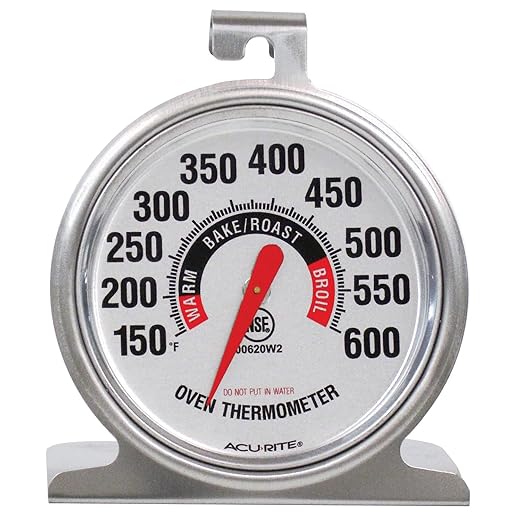
AcuRite 00620A2 Stainless Steel Oven Thermometer (150 to 600 F)
- Sits or hangs on any oven rack, gives you the real temperature versus what the dial says.
- Most ovens are off by 25 to 50 degrees once they age, this is the cheapest way to find out.
- Large dial face is easy to read through the door without opening it.
- Stainless steel housing handles full oven temps without warping.
- Under $10, pays for itself in burned cookies avoided.

Klein Tools NCVT1P Voltage Tester, Non-Contact Low Voltage Tester Pen, 50V to 1000V AC, Audible and Flashing LED Alarms, Pocket Clip
- NON-CONTACT DETECTION of AC voltage in cables, cords, circuit breakers, lighting fixtures, switches, non-tamper-resistant outlets, and wires
- CLEAR INDICATION: Bright LED illuminates green to indicate tester is operational and flashes red and emits a beeping alert when voltage is detected
- BROAD APPLICATION with a 50 to 1000V AC power detection range
- CONSERVE BATTERIES with auto power-off function
- LIGHTWEIGHT AND DURABLE compact design with a convenient clip fits securely in pocket; 6.6-Foot (2 m) drop protection

Replacement Gas Range Oven Igniter
- Upgraded igniter kit includes mounting bracket, wire connector plug, and 2 ceramic nuts.
- Detailed specs: 8-inch wire lead, 1-1/2 inch ceramic rod, 1.1-inch plug, 3.3-3.8 Amps, 120VAC.
- Compatible with G-E, Samsung, Americana, Hotpoint, and Kenmore gas range ovens (replaces WB13K21, 5303935066, etc.).
- Resolves common oven issues like failing to heat, not lighting, or gas not coming on properly.
- Anti-aging tested for higher heat resistance, greater power connection, and extended stove/oven life.
A weak bake, uneven cooking, or an oven that never reaches the desired temperature signals a problem. Many homeowners face an oven not heating properly dilemma. The best first step is always to verify the actual temperature inside your oven. For that, the AcuRite 00620A2 Stainless Steel Oven Thermometer is our top recommendation. Most ovens, especially older ones, are off by 25 to 50 degrees from what the dial says. This simple tool helps you confirm if the problem is a faulty thermostat or another component.
An oven that does not heat up properly can stem from various issues, from minor thermostat calibration problems to a failing heating element or igniter. Identifying the root cause requires methodical troubleshooting. If one is broken or not glowing red, it is likely the culprit.
step by step Troubleshooting for an Oven Not Heating Properly
1. Verify the Actual Oven Temperature
Before you start replacing parts, confirm your oven's actual temperature. Many ovens, even new ones, can have temperature variances. An external oven thermometer provides an accurate reading.
How to use it: Place the thermometer on a middle rack. Set your oven to a specific temperature, like 350°F. Wait at least 20-30 minutes for the oven to stabilize. Read the thermometer through the oven door. If the reading is significantly different (more than 25°F) from your setting, you have a temperature issue.
2. Check for Power Supply Issues
An electric oven not heating up properly might not be getting consistent power. Make sure the oven is plugged in securely. Check the circuit breaker. A tripped breaker will cut power to the oven. For gas ovens, ensure the gas supply valve is fully open.
You can also use a non-contact voltage tester to verify power at the outlet or internal wiring if you are comfortable and have disconnected the appliance. For more details on electrical testing, see our Electrical Test Kit Review: Your Complete Guide to Safe Home Electrical Troubleshooting.
3. Inspect the Heating Elements (Electric Ovens)
For a Whirlpool electric oven not heating up properly or a Samsung electric oven not heating properly, inspect the bake and broil elements. The bake element is usually at the bottom of the oven, and the broil element is at the top. When working, they should glow red. If an element has visible breaks, blisters, or does not glow, it needs replacement. Replacement elements typically cost between $30 and $100, depending on the oven model. Replacing them often requires basic hand tools and about 30-60 minutes.
4. Examine the Igniter (Gas Ovens)
If your gas oven is not heating properly, the igniter is a prime suspect. A weak igniter may glow but not get hot enough to ignite the gas, or it might not glow at all. When you turn on a gas oven, you should hear a faint hiss of gas, followed by a click and then the whoosh of the flame lighting. If you only hear gas or nothing at all, the igniter is likely failing. Replacement gas oven igniters cost around $50-$80. Replacing one can take 45-90 minutes. For more specific guidance, read our article Gas Oven Igniter Clicks But Won't Light: Top Fixes.
5. Check the Oven Door Seal
Heat escaping from the oven door can lead to longer preheat times and an oven not heating properly to the set temperature. Inspect the rubber or silicone gasket around the oven door. It should be pliable and intact. If it is cracked, stiff, or torn, replace it. A new door seal costs $20-$50 and is usually easy to install.
6. Consider the Control Board
If all other components appear fine, the electronic control board might be faulty. This is a more complex and expensive repair, with control boards often costing $150-$300 or more. Diagnosis can be difficult without specialized tools. Often, if the control board is the issue, other functions may also be erratic, such as the clock or timer.
Top Troubleshooting Tools for Your Oven
TOP PICK: AcuRite 00620A2 Stainless Steel Oven Thermometer (150 to 600 F)
The AcuRite 00620A2 Stainless Steel Oven Thermometer is an essential, low-cost diagnostic tool for anyone experiencing an oven not heating properly. It provides an accurate, independent reading of your oven's internal temperature, which is often the first and most vital piece of information you need. Many ovens, especially as they age, show a temperature on the display that is significantly different from the actual temperature inside. This thermometer immediately tells you if your oven is truly underperforming or if its thermostat simply needs calibration. Based on product specs, its large dial face is easy to read through the oven door, avoiding heat loss from opening it.
- Pros: Affordable (typically under $10), highly accurate for temperature verification, durable stainless steel construction, large easy-to-read display, can sit or hang on any oven rack. It is the cheapest way to confirm if your oven is off by 25 to 50 degrees.
- Cons: Only measures temperature; it does not diagnose component failures.
- Best For: Every homeowner who owns an oven. This is the first tool to buy if you suspect your oven is not heating properly. It helps avoid unnecessary part replacements by confirming the actual temperature discrepancy.
Option 2: Klein Tools NCVT1P Voltage Tester, Non-Contact Low Voltage Tester Pen, 50V to 1000V AC
When an electric oven is not heating properly, checking for voltage presence is a critical safety and diagnostic step. The Klein Tools NCVT1P provides non-contact detection of AC voltage, making it safer than traditional multimeters for initial checks. Based on manufacturer data, it works across a broad application range, detecting 50V to 1000V AC. This allows you to quickly determine if power is reaching the oven outlet, internal wiring, or specific components before attempting more involved repairs. Its bright LED and audible beeping alerts offer clear indication of voltage. This tool is valuable for troubleshooting a Whirlpool electric oven not heating up properly or a Samsung electric oven not heating properly by confirming power at various points.
- Pros: Non-contact operation enhances safety, clear LED and audible alerts, pocket clip for portability, useful for general home electrical troubleshooting, broad voltage detection range. Costs about $20-$30.
- Cons: Only detects the presence or absence of voltage; it does not provide a specific voltage reading like a multimeter.
- Best For: DIYers who need to safely check for power in an electric oven or other household appliances. It is an excellent first-line electrical diagnostic tool for confirming power supply without direct contact.
Option 3: Replacement Gas Range Oven Igniter
If your gas oven is not heating properly and you have confirmed gas supply, a faulty igniter is often the next suspect. This replacement gas range oven igniter kit is designed to be compatible with many common brands, including G-E, Samsung, Americana, Hotpoint, and Kenmore. Based on product specifications, it includes an 8-inch wire lead, 1-1/2 inch ceramic rod, and a wire connector plug, making it a direct replacement for various part numbers like WB13K21 and 5303935066. Replacing the igniter is a common DIY fix that can save you a significant amount over a professional repair. This is especially true for LG oven not heating properly issues where the igniter is a frequent point of failure.
- Pros: Direct replacement for many popular gas oven models, includes necessary mounting bracket and ceramic nuts for installation, relatively inexpensive (typically $50-$80).
- Cons: Requires opening the oven and basic electrical wiring knowledge; specific only to gas ovens.
- Best For: Homeowners with gas ovens who have diagnosed a weak or failed igniter. This part is a cost effective solution to restore full heating functionality without calling a professional.
When to Call a Professional
While many oven heating issues are fixable by a diligent homeowner, some problems warrant professional attention. If you have checked the basic components, replaced obvious failures, and your oven is still not heating properly, it might be time to call an appliance repair technician. Issues with the main control board, internal wiring beyond basic elements, or gas leaks (which require immediate professional intervention) are best left to licensed experts. A typical service call fee ranges from $80 to $150, plus the cost of parts and labor. Sometimes, for older appliances, the cost of repair can approach the cost of a new oven, making replacement a more economical choice.
Regular maintenance can help prevent many common appliance issues. Consider reviewing our Home appliance maintenance checklist that saves you $1000s to keep your appliances running smoothly.
Conclusion
An oven not heating properly can disrupt your kitchen routine, but with the right tools and a systematic approach, you can often diagnose and fix the problem yourself. Start with the easiest and cheapest checks, like verifying the temperature with an oven thermometer. Progress to checking power, heating elements, or igniters. These DIY steps save you money and keep your oven performing reliably for years to come.
AcuRite 00620A2 Stainless Steel Oven Thermometer (150 to 600 F)
- Sits or hangs on any oven rack, gives you the real temperature versus what the dial says.
- Most ovens are off by 25 to 50 degrees once they age, this is the cheapest way to find out.
- Large dial face is easy to read through the door without opening it.
- Stainless steel housing handles full oven temps without warping.
- Under $10, pays for itself in burned cookies avoided.
Klein Tools NCVT1P Voltage Tester, Non-Contact Low Voltage Tester Pen, 50V to 1000V AC, Audible and Flashing LED Alarms, Pocket Clip
- NON-CONTACT DETECTION of AC voltage in cables, cords, circuit breakers, lighting fixtures, switches, non-tamper-resistant outlets, and wires
- CLEAR INDICATION: Bright LED illuminates green to indicate tester is operational and flashes red and emits a beeping alert when voltage is detected
- BROAD APPLICATION with a 50 to 1000V AC power detection range
- CONSERVE BATTERIES with auto power-off function
- LIGHTWEIGHT AND DURABLE compact design with a convenient clip fits securely in pocket; 6.6-Foot (2 m) drop protection
Replacement Gas Range Oven Igniter
- Upgraded igniter kit includes mounting bracket, wire connector plug, and 2 ceramic nuts.
- Detailed specs: 8-inch wire lead, 1-1/2 inch ceramic rod, 1.1-inch plug, 3.3-3.8 Amps, 120VAC.
- Compatible with G-E, Samsung, Americana, Hotpoint, and Kenmore gas range ovens (replaces WB13K21, 5303935066, etc.).
- Resolves common oven issues like failing to heat, not lighting, or gas not coming on properly.
- Anti-aging tested for higher heat resistance, greater power connection, and extended stove/oven life.