
Upgraded 12001656 Oven Temperature Sensor Part - Compatible with Whirlpool Kenmore Ovens - Replaces AP4009009 74004943 PS1570174
- 💡 IMPORTANT: Please check the model number carefully before ordering. If you're unsure about the.
- Please check the model number carefully before ordering. You can send us your oven model number, we can.
- 100% LIFETIME PROTECTION: Enjoy reliable performance with our lifetime protection, ensuring that your.
- 12001656 Oven Temperature Sensor. This oven sensor comes with two wire harness adapters. There is an.

BlueStars Upgraded W10131825 Oven Temperature Sensor - Compatible with Whirlpool Maytag KitchenAid Ovens - Replaces WPW10131825
- Please check the model number carefully before ordering. You can send us your oven/range/cooktop model.
- W10131825 Oven Temperature Sensor
- It is made exactly fit for most top name brands (KitchenAid, Whirlpool, Jenn-Air, Maytag), fits models:.
- The replacement part is made from durable high quality material and well-tested by the manufacturer -.
A burnt casserole or a pie with a soggy bottom often signals a problem: your oven is not maintaining its set temperature. This issue can stem from several causes, some requiring only a simple adjustment, while others need a part replacement. Accurately diagnosing the problem will help you decide if a DIY fix is possible or if professional help is needed.
Understanding How Your Oven Controls Temperature
Most modern ovens use a temperature sensor, also known as a Resistance Temperature Detector (RTD) probe, to monitor the internal temperature. This sensor sends electrical resistance readings to the oven's control board. The control board then compares this reading to your desired temperature setting and turns the heating elements on or off to maintain consistency. If any part of this system fails, the oven's temperature will become inaccurate.
How to Test Your Oven's Temperature Accuracy
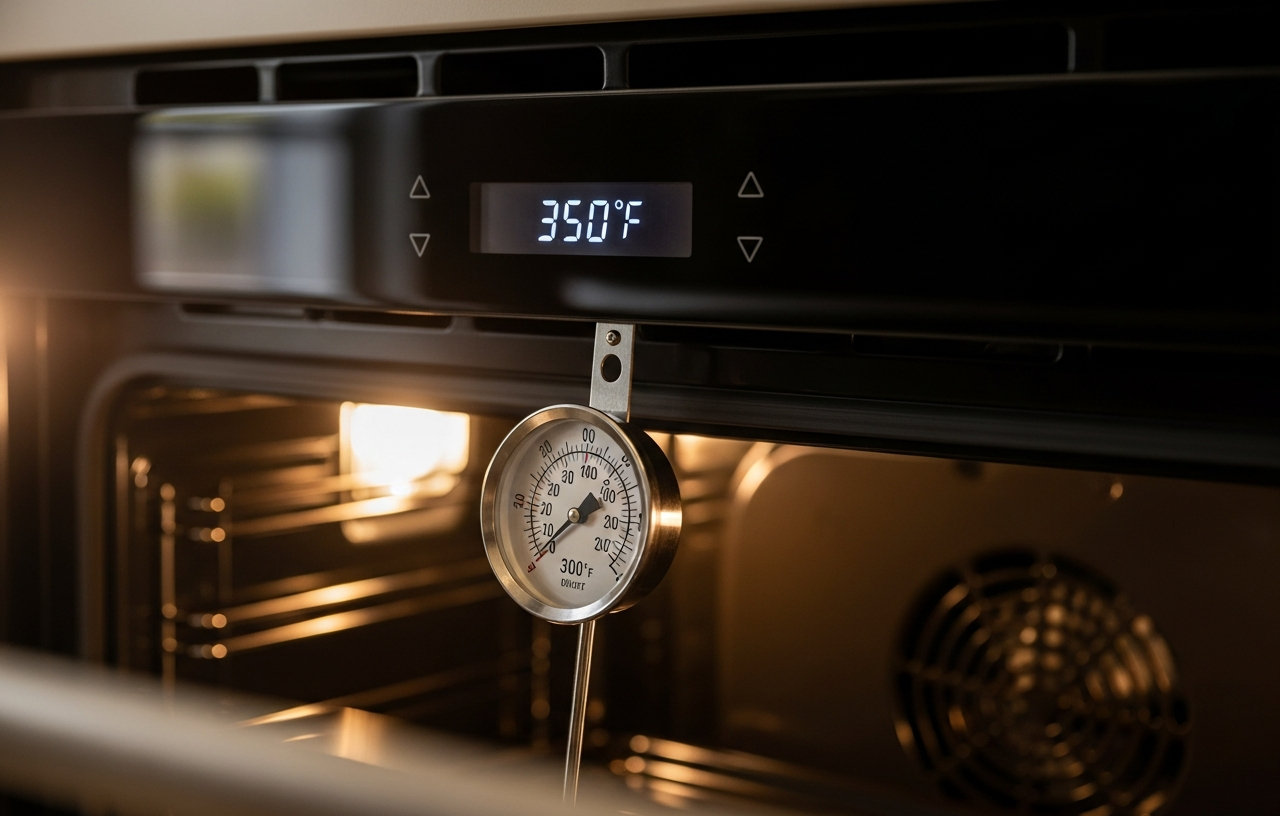
Before attempting any repairs, confirm that your oven's temperature is indeed inaccurate. Do not rely on packaged food instructions alone. An oven thermometer is an inexpensive tool for this test. Place a reliable oven thermometer in the center of your oven. Preheat the oven to 350°F and let it stabilize for at least 20 minutes. Check the thermometer reading. Repeat this at 250°F and 400°F. If the thermometer consistently reads more than 25°F higher or lower than the set temperature, your oven has an accuracy problem.
Common Causes of Inaccurate Oven Temperature
1. The Oven Temperature Sensor (RTD Probe) Is Faulty
The temperature sensor is the most frequent culprit behind inaccurate oven temperatures. Over time, these sensors can degrade, leading to incorrect resistance readings. This makes the control board misinterpret the oven's actual temperature. A faulty sensor might cause the oven to overheat, underheat, or cycle erratically.
You can test the sensor's resistance using a multimeter. Disconnect power to the oven first. Locate the sensor, typically a small metal probe extending into the oven cavity, often at the top left or right rear. Remove it and test its resistance at room temperature. A healthy sensor should read around 1080 to 1100 ohms at 70°F (21°C). The resistance should increase as the temperature rises. If the reading is significantly off or shows an open circuit (infinity), the sensor is bad. For details on using a multimeter safely, consult an article like Electrical Test Kit Review: Your Complete Guide to Safe Home Electrical Troubleshooting.
Many homeowners successfully replace this part themselves. For Whirlpool and Kenmore ovens, the Upgraded 12001656 Oven Temperature Sensor Part is a popular choice, known for its compatibility and reliable performance. Another option, the BlueStars Upgraded W10131825 Oven Temperature Sensor, fits a wide range of Whirlpool, Maytag, and KitchenAid models. Always check your oven's specific model number before ordering a replacement part.
Professional repair for a faulty sensor usually costs between $150 and $300, including parts and labor.
2. Oven Calibration Is Off
Many ovens allow for manual temperature calibration, often called an offset adjustment. This feature lets you fine-tune the oven's temperature by a few degrees up or down to match your desired setting. If your oven thermometer shows a consistent but small discrepancy (e.g., always 15°F too low), calibration might solve the issue.
Refer to your oven's owner's manual for specific calibration instructions. The process usually involves pressing certain buttons on the control panel, such as 'Bake' and 'Temp' or 'Clock' simultaneously, and then using the arrow keys to adjust the temperature offset. Most ovens allow adjustments in 5-degree increments, typically up to +/- 35°F. This is a free fix that you can perform in minutes.
3. Faulty Oven Control Board
The control board is the brain of your oven. It processes signals from the temperature sensor and sends power to the heating elements. If the control board malfunctions, it might misinterpret sensor readings or fail to send the correct power signals, leading to inaccurate temperatures. Unlike a faulty sensor, a bad control board can manifest in various ways, including error codes, erratic behavior, or complete failure to heat.
Diagnosing a faulty control board without specialized tools can be challenging. Often, it is a last resort after ruling out other, simpler causes. If the oven displays cryptic error codes, or if the temperature sensor tests good but the oven still misbehaves, the control board might be the problem. A new control board can cost $150 to $400, and professional installation can add another $100 to $250. This is an expensive repair, often warranting a discussion about the oven's age and overall condition.
4. Weak or Failing Heating Elements (Electric Ovens)
In electric ovens, both the bake and broil elements play a role in maintaining temperature. If one of these elements is weak or partially failing, the oven might struggle to reach or hold the set temperature. Visually inspect both elements. Look for any breaks, blisters, or areas that do not glow red during operation. A healthy element should glow evenly and brightly.
A failing element can cause slow preheating or uneven cooking. If only one element is visibly damaged, replacing it is a relatively easy fix. A replacement element typically costs $30 to $100. Professional replacement can add $60 to $120 in labor. For more issues related to heating, check out Oven Not Heating Properly? Troubleshooting & Top Tools.
5. Igniter Issues (Gas Ovens)
Gas ovens rely on an igniter to light the gas flowing to the burner. If the igniter is weak or failing, it may not generate enough heat to open the gas valve fully or quickly enough. This can result in delayed ignition, incomplete burning, or the oven struggling to reach and maintain temperature. A common symptom is a faint, inconsistent glow from the igniter or a longer-than-usual time for the burner to ignite.
If your gas oven takes more than 45-60 seconds to ignite, the igniter might be failing. A technician can test the igniter's amperage. Replacing a gas oven igniter costs roughly $70 to $150 for the part, with professional installation adding $100 to $200. You can learn more about this specific issue in Gas Oven Igniter Clicks But Won't Light: Top Fixes.
6. Problems with the Oven Door Seal
An oven door that does not seal properly can let heat escape, leading to inconsistent temperatures. Inspect the gasket around the oven door. It should be pliable and intact, forming a tight seal when the door is closed. Over time, gaskets can become brittle, cracked, or torn. This allows heat to leak out, forcing the oven to work harder and often resulting in lower actual temperatures inside.
Test the seal by closing the oven door on a piece of paper. If the paper slides out easily, the seal is compromised. Replacing a door gasket is an easy DIY task, with replacement parts typically costing $20 to $60. It simply peels off and presses into place on most models.
When to Call a Professional
While many oven temperature issues can be resolved with DIY troubleshooting, some situations warrant professional assistance. Complex control board issues or gas line repairs should always be handled by experienced professionals. The cost of a service call, typically $80-$150, can save you from further damage or safety risks.
Regular Oven Maintenance Tips
Routine maintenance can help prevent temperature inaccuracies and extend your oven's lifespan. Keep the oven clean, as spills and debris can interfere with sensor readings or heating element efficiency. Regularly inspect the door gasket for wear and tear. Consider using an oven thermometer occasionally to monitor performance. These simple steps contribute to consistent cooking results and fewer unexpected repairs. For a broader approach to appliance longevity, review a Home Appliance Maintenance Checklist That Saves You $1000s.
Addressing an inaccurate oven temperature quickly will save your meals and potentially reduce energy waste. With a methodical approach, you can restore your oven's precision.
Upgraded 12001656 Oven Temperature Sensor Part - Compatible with Whirlpool Kenmore Ovens - Replaces AP4009009 74004943 PS1570174
- 💡 IMPORTANT: Please check the model number carefully before ordering. If you're unsure about the.
- Please check the model number carefully before ordering. You can send us your oven model number, we can.
- 100% LIFETIME PROTECTION: Enjoy reliable performance with our lifetime protection, ensuring that your.
- 12001656 Oven Temperature Sensor. This oven sensor comes with two wire harness adapters. There is an.
BlueStars Upgraded W10131825 Oven Temperature Sensor - Compatible with Whirlpool Maytag KitchenAid Ovens - Replaces WPW10131825
- Please check the model number carefully before ordering. You can send us your oven/range/cooktop model.
- W10131825 Oven Temperature Sensor
- It is made exactly fit for most top name brands (KitchenAid, Whirlpool, Jenn-Air, Maytag), fits models:.
- The replacement part is made from durable high quality material and well-tested by the manufacturer -.


