GE Refrigerator Not Cooling? Start Here
A GE refrigerator that feels warm inside, even with the light on, indicates a failure in its cooling system. This problem often points to one of several common culprits, ranging from easily remedied maintenance issues to more complex component failures. Addressing these problems quickly preserves food and avoids higher repair costs. This guide will help you troubleshoot your GE refrigerator, addressing the most common issues first.
Before beginning any repair, unplug the refrigerator from the wall outlet. This prevents electrical shock and damage to the appliance. Always prioritize safety.
Check Temperature Settings and Door Seals
Incorrect Temperature Settings
Sometimes, the simplest solution is the correct one. Verify that your GE refrigerator temperature control is set correctly. The ideal temperature for the fresh food compartment is 37 to 40 degrees Fahrenheit (3 to 4 degrees Celsius). The freezer should be set to 0 degrees Fahrenheit (-18 degrees Celsius). If someone accidentally adjusted the settings, resetting them might solve the problem. Wait at least 24 hours for the refrigerator to stabilize after any temperature adjustment.
Compromised Door Seals
Warm air entering the refrigerator causes it to work harder and fail to cool properly. Inspect the rubber gaskets around both the refrigerator and freezer doors. Look for tears, cracks, or areas where the seal is loose. A simple test involves closing the door on a dollar bill. If you can easily pull the bill out, the seal in that area is weak. Clean the gaskets with warm, soapy water to remove any grime that might prevent a tight seal. If the seals are damaged, they will need replacement. This is a relatively inexpensive DIY fix, often costing $20-$50 for parts.
For more general troubleshooting tips when your appliance light is on but it's not cooling, you can also refer to our Refrigerator Not Cooling But Light Is On? DIY Troubleshooting Guide.
Clean the Condenser Coils
Dirty condenser coils are a very common reason for a GE refrigerator not cooling. These coils dissipate heat from the refrigerant. When they become covered in dust, pet hair, and debris, they cannot efficiently release heat. This forces the compressor to work harder, leading to poor cooling performance and increased energy consumption.
To clean them, first unplug the refrigerator. Locate the coils, usually at the bottom rear of the unit behind a kickplate or access panel. Use a vacuum cleaner with a brush attachment to remove loose dirt. A stiff brush can help dislodge stubborn grime. Clean the coils thoroughly until they are free of debris. This simple maintenance task should be performed every 6-12 months. Cleaning your condenser coils is a free repair that often solves cooling issues. For detailed instructions, see our guide on how to clean refrigerator condenser coils.
Inspect the Condenser Fan Motor
The condenser fan motor works in conjunction with the condenser coils. It draws air over the coils to cool the refrigerant. If this fan motor fails, the refrigerator will not cool effectively. You can usually find the condenser fan next to the compressor at the back of the refrigerator, near the floor.
Unplug the refrigerator before checking the fan. Remove the back access panel. Spin the fan blades by hand. They should spin freely. If they are stiff or obstructed, clear any debris. If the blades spin freely but the fan does not run when power is restored (and the compressor is running), the motor might be faulty. You can test the motor for continuity using a multimeter. A replacement condenser fan motor typically costs $50-$150 for the part.
Troubleshoot the Evaporator Fan Motor
The evaporator fan motor circulates cold air from the freezer compartment into the fresh food compartment. If this fan stops working, the freezer might remain cold, but the refrigerator section will become warm. This is a common symptom of a general electric freezer not working as well as the fridge.
Accessing the evaporator fan usually requires emptying the freezer and removing an interior panel, typically at the back. Unplug the appliance first. Once exposed, try to spin the fan blades by hand. If they are obstructed by ice, defrost the freezer completely. If they are stiff or do not spin freely even after defrosting, the motor bearings might be seized. You can test the motor with a multimeter for continuity. A new evaporator fan motor usually costs $70-$150. A repair professional would charge $150-$350 for labor on top of the part cost and service call.
Check the Defrost System
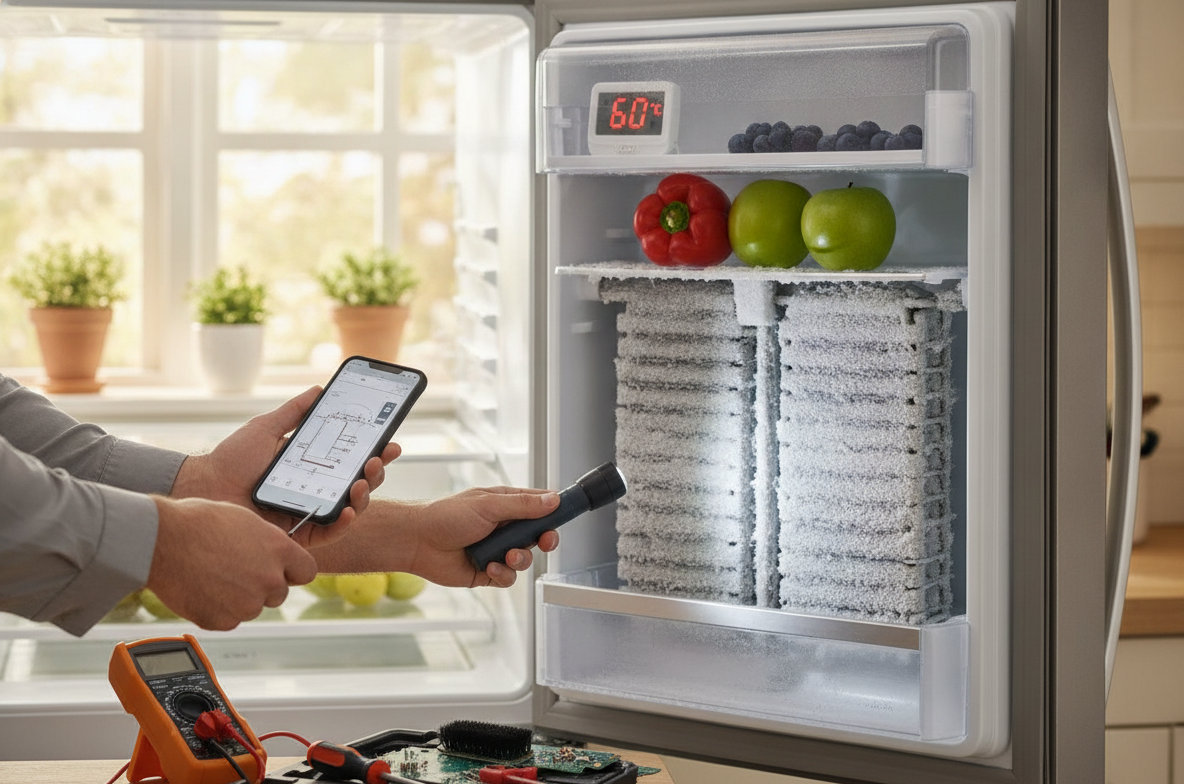
GE refrigerators have a defrost system that prevents excessive ice buildup on the evaporator coils. If this system malfunctions, ice can accumulate and block the airflow over the coils, preventing cold air from circulating. Symptoms include the evaporator fan running but no cold air reaching the fridge, or a general electric freezer not working effectively due to thick ice.
The defrost system includes three main components:
- Defrost Heater: Melts ice off the evaporator coils. Test for continuity with a multimeter.
- Defrost Thermostat: Monitors the temperature of the evaporator coils and activates the heater when needed. Test for continuity when cold.
- Defrost Timer (or Main Control Board): Cycles the defrost heater on and off.
If any of these components fail, the coils will ice over. You may need to manually defrost the refrigerator by unplugging it for 24-48 hours. If the problem returns, one of these components is likely faulty. Defrost heaters typically cost $40-$100, thermostats $20-$50, and a defrost timer $30-$80. Replacement costs for parts are low, but professional labor can be $100-$250 for diagnosis and replacement.
Inspect the Start Relay and Compressor
The compressor is the heart of your refrigerator's cooling system. It compresses the refrigerant, initiating the cooling cycle. The start relay provides a jolt of electricity to the compressor to get it running. If your GE refrigerator is not cooling and you hear a clicking sound every few minutes, but the compressor does not start, it might be a faulty start relay.
The start relay is usually attached to the side of the compressor at the back of the refrigerator. Unplug the unit. Remove the relay and shake it. If it rattles, it is likely defective. You can also test it for continuity. A faulty start relay is a relatively inexpensive fix, with parts costing $15-$40. Replacing it yourself is manageable for many homeowners.
If the start relay is good, or if replacing it does not solve the problem, the compressor itself may be failing. Compressor failure is a major issue and usually requires professional repair or refrigerator replacement. A new compressor part can cost $200-$500 or more. Professional installation is complex and expensive, often costing $400-$800 in labor, plus refrigerant recharge. Total cost for compressor replacement by a professional often ranges from $600-$1500, making a new appliance a more economical choice for older units.
General Electric Fridge Water Dispenser Not Working?
While not directly related to cooling, if your general electric fridge water dispenser is not working, it could indicate issues with the water inlet valve or the water line. If the water line is frozen, it might be due to incorrect freezer temperatures or a faulty defrost system, which could indirectly impact cooling efficiency in the freezer compartment. Check the water line for kinks or ice blockages. The water inlet valve can also be tested for continuity using a multimeter.
GE Profile Refrigerator Temperature Control Problems
GE Profile models often feature advanced electronic temperature controls. If your GE Profile refrigerator temperature control is not working correctly, it could be a faulty thermistor or a problem with the main control board. Thermistors monitor the temperature inside the compartments and send readings to the control board. If a thermistor provides inaccurate readings, the refrigerator may not cool properly.
Testing thermistors requires a multimeter to check their resistance values, which change with temperature. Compare readings to the manufacturer's specifications. If a thermistor is faulty, it typically costs $20-$50 to replace. If multiple components test correctly and the temperature control remains erratic, the main control board might be the culprit.
Faulty Main Control Board
The main control board acts as the brain of your GE refrigerator, sending power to various components like the compressor, fans, and defrost system. If the board malfunctions, it can lead to a wide array of problems, including a GE refrigerator not cooling. Symptoms might be inconsistent cooling, lights not working, or the refrigerator appearing completely dead.
Diagnosing a faulty control board is challenging and often requires ruling out all other potential causes. Visual inspection might reveal burnt spots or damaged components on the board. Replacing a main control board is an expensive repair, with parts typically costing $150-$350. Professional labor for this can add another $150-$300, plus the service call fee. Given the cost, it is wise to be certain before replacing the board.
For testing electrical components, an electrical test kit is essential. Always disconnect power before testing.
When to Call a Professional
While many GE refrigerator cooling issues can be resolved with DIY troubleshooting, some problems warrant professional attention. If you have checked the basic components like coils, fans, and door seals, and the issue persists, consider calling a certified appliance technician. Complex repairs involving sealed systems (refrigerant leaks, compressor replacement) or main control board diagnostics are best left to experts.
Final Checks
After performing any repair, plug the refrigerator back in and monitor its performance for 24 hours. Listen for unusual noises, check the temperature with a thermometer, and observe if the cooling improves. A properly functioning refrigerator should cycle on and off periodically, maintaining consistent cold temperatures in both compartments.