
【Upgraded】 BlueStars WPW10181986 W10181986 W10131826 Range Oven Sensor Probe Part - Compatible with Whirlpool Maytag Kenmore
- Please check the model number carefully before ordering. You can send us your range/oven model number, we.
- WPW10181986 W10181986 Range Oven Sensor Probe.
- It is made exactly fit for most top name brands (Whirlpool, Maytag, Kenmore, Amana, KitchenAid, Estate.
- [Kenmore] - 66475272502, 66475273502, 66495274502, 66572002101, 66572004101, 66572012101, 66572012103.

Upgraded 12001656 Oven Temperature Sensor Part - Compatible with Whirlpool Kenmore Ovens - Replaces AP4009009 74004943 PS1570174
- 💡 IMPORTANT: Please check the model number carefully before ordering. If you're unsure about the.
- Please check the model number carefully before ordering. You can send us your oven model number, we can.
- 100% LIFETIME PROTECTION: Enjoy reliable performance with our lifetime protection, ensuring that your.
- 12001656 Oven Temperature Sensor. This oven sensor comes with two wire harness adapters. There is an.

BlueStars Upgraded W10131825 Oven Temperature Sensor - Compatible with Whirlpool Maytag KitchenAid Ovens - Replaces WPW10131825
- Please check the model number carefully before ordering. You can send us your oven/range/cooktop model.
- W10131825 Oven Temperature Sensor
- It is made exactly fit for most top name brands (KitchenAid, Whirlpool, Jenn-Air, Maytag), fits models:.
- The replacement part is made from durable high quality material and well-tested by the manufacturer -.
Baked goods come out burnt on the outside and raw in the middle, or roasts take hours longer than expected. These are classic signs that your oven temperature is not accurate. An oven that runs too hot or too cold by even 25-50 degrees Fahrenheit can ruin recipes and waste food. Fortunately, you can often fix this problem yourself by learning how to calibrate an oven temperature.
Many ovens, especially older models, can drift from their factory-set temperatures over time. This guide will show you how to test your oven's accuracy and then how to calibrate the oven temperature using either electronic controls or a manual adjustment. You will soon achieve consistent, delicious results from your kitchen.
Why Accurate Oven Temperature Matters
Precision is essential for successful cooking and baking. A recipe assumes a specific temperature for chemical reactions to occur, such as yeast activation in bread or the setting of egg proteins in a custard. If your oven is off by a significant margin, these processes will not happen correctly.
- Baking: Cakes may sink in the middle, cookies may burn on the bottom, or bread may not rise properly.
- Roasting: Meats can dry out or remain undercooked, and vegetables may not caramelize as intended.
- Energy Efficiency: An oven that constantly overshoots or struggles to reach temperature can use more energy than necessary.
Knowing how to calibrate your oven temperature gives you confidence in your appliance. It also prevents wasted ingredients and the disappointment of failed dishes.
Tools and Materials Needed
Before you begin to calibrate your oven, gather these items:
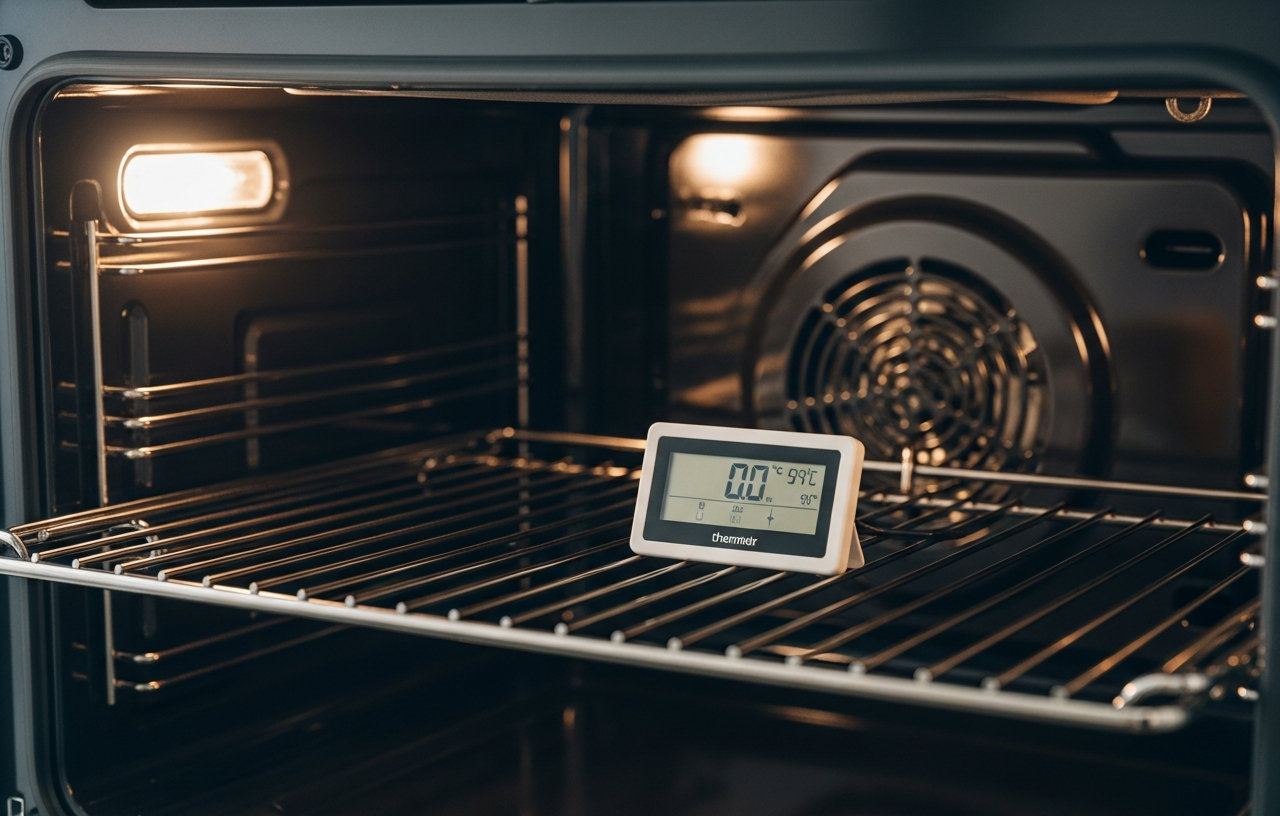
- An accurate oven thermometer. Do not rely on the oven's built-in display for testing. A good quality, standalone oven thermometer provides a true reading.
- Screwdriver set (Phillips and flathead, if your oven requires manual adjustment).
- Owner's manual for your oven (helpful for specific calibration instructions).
- Pen and paper for recording temperatures.
- Timer.
- Patience. This process requires careful observation.
Safety First
Working with appliances always requires caution. Keep these safety tips in mind:
- Always keep children and pets away from the kitchen during testing and calibration.
- The oven will be hot. Use oven mitts if you need to access the interior after heating.
- Make sure the oven is unplugged or the circuit breaker is off before performing any manual adjustments that require opening the control panel. This prevents electrical shock.
- Allow the oven to cool completely before touching any internal components.
step by step Guide: Testing Your Oven's Accuracy
The first step to learning how to calibrate an oven temperature is to determine how far off your oven truly is. This process typically takes about 30-60 minutes.
Step 1: Position the Oven Thermometer
Place a reliable oven thermometer on the middle rack of your cold oven. Make sure it is positioned where you can clearly see the reading through the oven door, but not directly touching the oven walls or heating elements.
Step 2: Preheat the Oven
Close the oven door. Set your oven to a common baking temperature, such as 350°F (175°C). Allow the oven to preheat completely. Many ovens will chime when they reach the set temperature, but do not rely on this signal alone. The internal temperature often fluctuates during preheating.
Step 3: Monitor and Record Temperatures
Once the oven indicates it has reached 350°F, let it stabilize for at least 15-20 minutes. This allows the internal temperature to settle. After this stabilization period, check the reading on your oven thermometer. Record this temperature.
Step 4: Repeat Readings
Continue to monitor the oven thermometer every 5-10 minutes for another 30 minutes. Record each reading. You will likely see some minor fluctuations, which are normal. Note the average temperature you observe. Compare this average to your oven's set temperature (350°F).
If your oven thermometer consistently reads 25-50 degrees higher or lower than the set temperature, it needs calibration. For example, if you set it to 350°F and your thermometer reads 375°F, your oven runs 25 degrees hot. If it reads 325°F, it runs 25 degrees cold.
step by step Guide: How to Calibrate Your Oven
The method to calibrate an oven temperature depends on whether your oven has electronic controls or a manual temperature knob.
Method 1: Calibrating Ovens with Electronic Controls (Most Modern Ovens)
This process usually involves accessing a calibration setting through the oven's control panel. Consult your owner's manual for exact steps, as button sequences vary by manufacturer. This takes about 10-20 minutes.
-
Access Calibration Mode: Many ovens, including Whirlpool models, have a hidden calibration mode. You usually activate it by pressing and holding the 'Bake' button for several seconds, or a combination of 'Bake' and 'Temp' or 'Clock'. The display may show '0 F' or '0 C' or a similar indicator when you enter this mode.
-
Adjust the Temperature Offset: Use the 'Temp Up' or 'Temp Down' (or '+' and '-') buttons to adjust the offset. If your oven was running 25 degrees hot, you would set the offset to -25°F. If it was running 25 degrees cold, you would set it to +25°F.
-
Save the Setting: Press 'Start', 'Enter', or 'Off/Cancel' to save the new calibration setting. Again, refer to your manual.
-
Re-test Accuracy: After saving, repeat the oven accuracy test (Steps 1-4 above) to confirm the calibration was successful. Make further small adjustments if necessary.
Many modern ovens allow for adjustments in increments of 5°F or 10°F, typically up to +/- 35°F. If your oven is off by more than this, a different problem might exist, such as a faulty temperature sensor.
Method 2: Calibrating Ovens with Manual Knobs (Older Ovens)
Older gas or electric ovens with mechanical thermostats often require a physical adjustment to the temperature knob. This typically takes 20-40 minutes and requires careful attention.
-
Turn Off Power: For safety, unplug the oven or turn off the circuit breaker that supplies power to it. You will be removing the knob and potentially accessing internal components.
-
Remove the Temperature Knob: Gently pull the temperature control knob straight off its stem. Some knobs may have a small screw on the side or back that needs to be loosened first.
-
Locate the Calibration Screw: On the back of the knob, or sometimes on the stem itself, you will find a small screw. This is the calibration screw. It usually has a Phillips or flathead head.
-
Adjust the Setting:
- If your oven runs hot, turn the screw counter-clockwise a small amount (e.g., a quarter turn). This tells the oven to reach a lower temperature at the same knob setting.
- If your oven runs cold, turn the screw clockwise a small amount. This tells the oven to reach a higher temperature.
Make only small adjustments at a time. A little goes a long way.
-
Reassemble and Re-test: Replace the knob, restore power to the oven, and then repeat the oven accuracy test (Steps 1-4 above). Make sure the oven is cool before starting the test again. You might need to repeat the adjustment and test process a few times to get it just right.
When to Replace Your Oven Temperature Sensor
If you have tried to calibrate your oven temperature using the methods above and it still runs significantly hot or cold, or if the temperature fluctuates wildly, the oven temperature sensor (also called a thermistor or probe) might be faulty. A malfunctioning sensor cannot accurately read the oven's internal temperature, leading to inconsistent heating. For example, if your oven is not heating properly at all, the sensor could be a primary suspect.
Replacing an oven temperature sensor is a common DIY repair. You will usually find the sensor protruding into the oven cavity, often at the top back or side, held in place by one or two screws. Before ordering a replacement, always verify the part number with your oven's model number to ensure compatibility. Many sensors fit multiple brands.
Recommended Oven Temperature Sensors (Compatible with Major Brands):
- BlueStars WPW10181986 W10181986 W10131826 Range Oven Sensor Probe Part: This sensor is made to fit most top name brands including Whirlpool, Maytag, Kenmore, Amana, and KitchenAid. It's a popular choice for many models. Make sure to check your specific oven's model number before purchasing.
- Upgraded 12001656 Oven Temperature Sensor Part: Compatible with Whirlpool and Kenmore ovens, this part replaces several older part numbers like AP4009009 and PS1570174. It's designed for reliable performance.
- BlueStars Upgraded W10131825 Oven Temperature Sensor: This sensor works with Whirlpool, Maytag, and KitchenAid ovens. As with any part, confirming your oven's model number with the product description is important for a correct fit.
Replacing the sensor typically involves removing the old one, disconnecting its wires (often a simple plug-in connector), and installing the new one. This usually takes 15-30 minutes. An electrical test kit can help verify continuity if you suspect the sensor is completely dead, but often inconsistent temperature is the clearest sign of failure.
When to Call a Professional
If you have calibrated your oven and even replaced the temperature sensor, but you are still experiencing significant temperature inaccuracies or other major issues, it might be time to call a professional appliance technician. Other components, such as the oven's main control board or the igniter (for gas ovens), could be failing. The total repair cost will depend on the part needed and labor rates, which can range from $150-$400 or more for complex issues like a control board replacement. DIY calibration and sensor replacement can save you a significant amount of money compared to professional repair.
Maintain Your Oven for Lasting Accuracy
Regular maintenance helps your oven perform at its best. Keep the oven clean, especially around the temperature sensor and heating elements, as buildup can affect readings. Periodically check the door seal for gaps that could allow heat to escape. A well maintained appliance generally has a longer lifespan and more consistent performance. Consider adding oven checks to your home appliance maintenance checklist.
By learning how to calibrate an oven temperature, you take control of your kitchen's most essential cooking tool. Enjoy perfectly baked and roasted dishes every time.
【Upgraded】 BlueStars WPW10181986 W10181986 W10131826 Range Oven Sensor Probe Part - Compatible with Whirlpool Maytag Kenmore
- Please check the model number carefully before ordering. You can send us your range/oven model number, we.
- WPW10181986 W10181986 Range Oven Sensor Probe.
- It is made exactly fit for most top name brands (Whirlpool, Maytag, Kenmore, Amana, KitchenAid, Estate.
- [Kenmore] - 66475272502, 66475273502, 66495274502, 66572002101, 66572004101, 66572012101, 66572012103.
Upgraded 12001656 Oven Temperature Sensor Part - Compatible with Whirlpool Kenmore Ovens - Replaces AP4009009 74004943 PS1570174
- 💡 IMPORTANT: Please check the model number carefully before ordering. If you're unsure about the.
- Please check the model number carefully before ordering. You can send us your oven model number, we can.
- 100% LIFETIME PROTECTION: Enjoy reliable performance with our lifetime protection, ensuring that your.
- 12001656 Oven Temperature Sensor. This oven sensor comes with two wire harness adapters. There is an.
BlueStars Upgraded W10131825 Oven Temperature Sensor - Compatible with Whirlpool Maytag KitchenAid Ovens - Replaces WPW10131825
- Please check the model number carefully before ordering. You can send us your oven/range/cooktop model.
- W10131825 Oven Temperature Sensor
- It is made exactly fit for most top name brands (KitchenAid, Whirlpool, Jenn-Air, Maytag), fits models:.
- The replacement part is made from durable high quality material and well-tested by the manufacturer -.


